This story is part of the Behind the Buzz project, an investigative collaboration involving The Examination, The Bristol Cable, Daraj, Investico, Paper Trail Media, Der Spiegel, Der Standard, STAT and the Toronto Star.
The energy drink business is booming, with the global market expected to grow 85% by 2033, according to market research. The largest companies, Red Bull and Monster Energy, have increased their profits in the last year. Even McDonald’s is getting into the business, teaming up with Red Bull to offer a beverage called Dragonberry Energizer.
But concerns have persisted about the safety of energy drinks, largely tied to the amount of caffeine, sugar and other ingredients, as well as the effects of mixing them with alcohol. Health advocates and medical professionals are particularly concerned about consumption by children and teens.
The American Beverage Association, which represents Red Bull, Monster and other energy drink makers, has said that energy drinks have been recognized as safe by the U.S Food and Drug Administration and health agencies around the world.
The industry group has said that cans include advisory statements saying energy drinks are not “intended or recommended for children, pregnant or nursing women, or those sensitive to caffeine.” And, the association said, “We do not promote excessive or rapid consumption.”
Red Bull, Monster and the American Beverage Association did not respond to requests for comment.
For “Behind the Buzz,” an ongoing investigation into the safety of energy drinks, The Examination and its reporting partners have found that some of the studies cited in arguing that energy drinks are safe are at odds with independent research.
Over more than a decade, Red Bull paid hundreds of thousands of dollars for university professors to conduct research on the health and behavioral risks of mixing alcohol and energy drinks. Nearly all of the studies by researchers with financial ties to Red Bull concluded that mixing the two is no more harmful than drinking alcohol alone. The vast majority of independent studies have concluded the opposite.
So what do we know about the health risks of energy drinks? We reviewed studies from the last two decades, interviewed almost a dozen scientists and public health experts and found a body of evidence linking caffeinated energy drinks to cardiac issues, obesity and anxiety.
Here’s what you need to know about energy drinks and your health.
What ingredients are in energy drinks?
Caffeine is one of the main ingredients in energy drinks. The caffeine content of major brands ranges from 80 mg in an 8.4-ounce Red Bull, slightly less than a typical cup of coffee, to 160 mg in a 16-ounce Monster and up to 300 mg in a 16-ounce can of Bang.
Energy drinks generally contain other ingredients that can magnify the effects of caffeine, according to research. Guarana, a plant native to the Amazon, contains caffeine in a higher concentration than in coffee beans. Ginseng is also a stimulant. Taurine, an amino acid, has been advertised to increase mental and physical performance, but little research has been done to substantiate that.
How do energy drinks affect your heart?
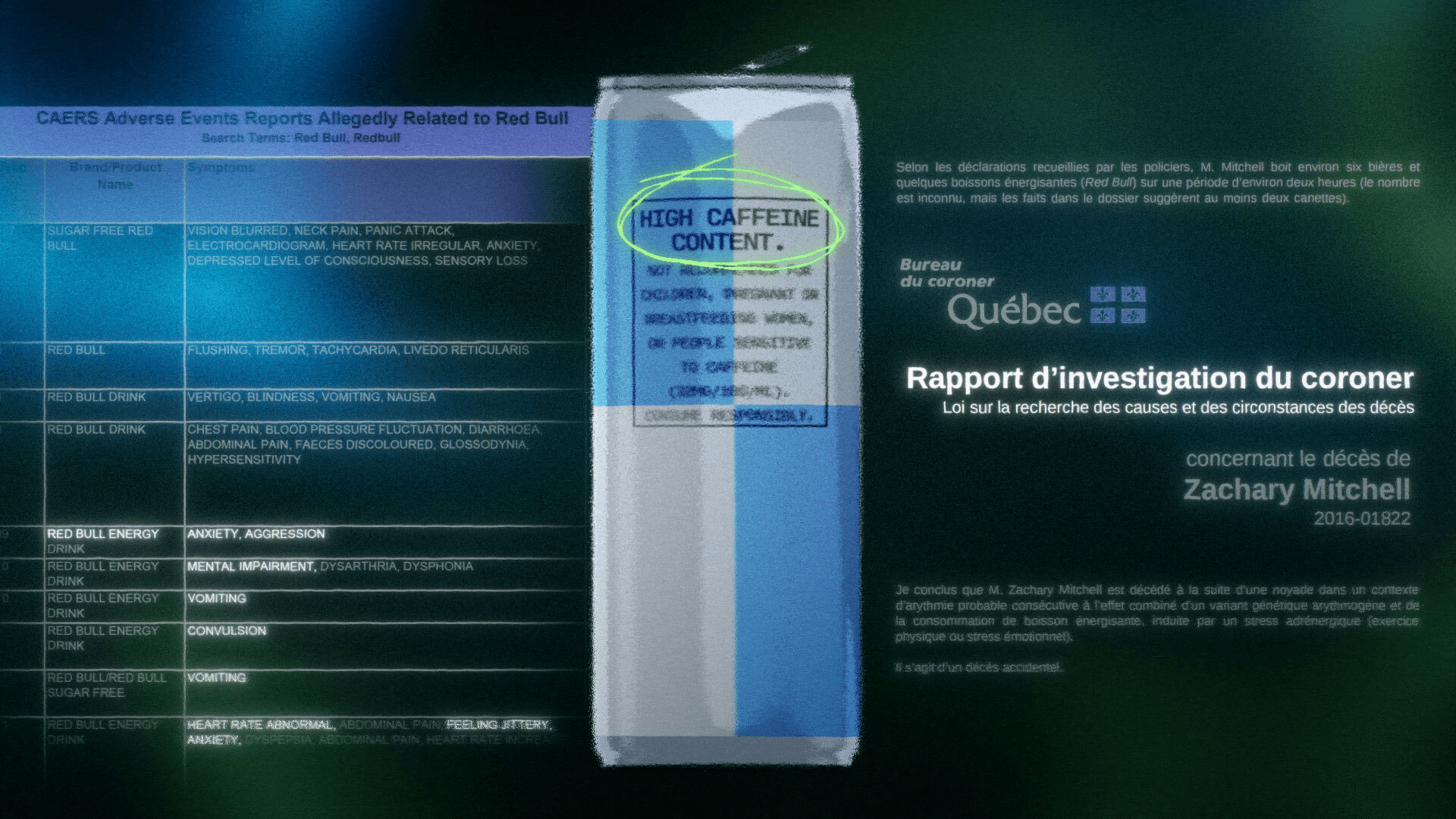
Much of the research on energy drinks focuses on possible links to heart problems. There have been reports of apparently healthy people, including teenagers and fitness enthusiasts, who have suffered cardiac issues after consuming energy drinks.
The U.S. National Institutes of Health warn that the high doses of caffeine in energy drinks can cause “serious heart and blood vessel problems,” including heart rhythm disturbances.
Last year, researchers at the Cleveland Clinic published a review of 37 studies that addressed a variety of cardiac symptoms; they found that most of those studies showed an increase in heart rate and blood pressure after consuming energy drinks.
Help us report on the safety of energy drinks
Some studies have linked energy drink consumption to a prolonged heartbeat, which can lead to fatal disturbances in heart rhythm. But not all independent studies have shared this conclusion, and researchers continue to explore the relationship between energy drinks and heart rhythm.
Some of these problems are exacerbated by underlying heart conditions that people, especially young people, may not be aware of. Another factor is how many drinks someone consumes.
Is it bad to mix energy drinks with alcohol?
Cocktails like Red Bull and vodka pose unique health and behavioral risks, according to leading alcohol researchers.
Tim Stockwell, who headed the Canadian Institute for Substance Use Research from 2004 to 2020, said adding the stimulation of energy drinks to the impaired judgment caused by alcohol is a recipe for risky behavior. Researchers call it “wide-awake drunk.”
“It's a pretty potentially dangerous combination, giving you the energy to do crazy, daft things,” Stockwell said, “and something that takes away the fear of the consequences.”
Studies have shown that energy drinks can increase the desire to drink more alcohol. A study of U.S. college students found that mixing the two was linked to higher rates of binge drinking, sexual abuse and drunk driving. A study of hospital patients in Canada linked the combination of energy drinks and alcohol to higher levels of injury; among women, the risk of injury tripled.
The American Beverage Association has said that energy drink labels “do not promote mixing energy drinks with alcohol or suggest they counteract alcohol's effects.”
What do energy drinks do to your blood sugar level?
Health organizations such as the American Academy of Pediatrics and the American Heart Association recommend that children and adults consume no more than 25 to 36 grams of sugar a day. A single energy drink can contain much more: A can of Monster Energy, for instance, has 54 grams of sugar.
Doctors and other health experts warn that frequent consumption of energy drinks, much like other sugar-sweetened beverages, can impact blood sugar levels and lead to obesity and diabetes. One study, which followed almost 7,000 school-aged children in Germany between 2016 and 2018, found that long-term energy drink consumption was associated with poor dietary habits, a higher body mass index and a host of other negative health outcomes.
Can energy drinks affect your mental health?
Simply put, yes, there is evidence that energy drinks can impact mood and behavior. Research has linked energy drinks to poor mental health, including stress and even suicide.
For a 2024 paper, researchers reviewed more than a dozen studies documenting energy drinks’ effect on sleep patterns. They found that children and young people who consume energy drinks didn’t sleep as long and had lower sleep quality.
Another study surveyed adolescents about their energy drink consumption in the prior week; consumption was associated with greater depressive symptoms, greater emotional difficulties and lower levels of well-being. A review of survey results from Canadian middle- and high-school students found that energy drink consumption was associated with psychological distress and suicidal ideation.
“There's a clustering of unhealthy behaviors” around energy drinks, and a clustering of poor mental health outcomes, said Amelia Lake, a professor of public health nutrition at Teesside University in the U.K. and deputy director of Fuse, The Centre for Translational Research in Public Health. “We're concerned for our younger population globally.”
What have regulators done in response to health concerns about energy drinks?
There’s no consensus on what should be done, if anything, to limit access to energy drinks in response to health concerns. However, a growing number of countries, including the U.K., Norway, Kuwait, Poland and Hungary, have concluded that energy drinks pose unacceptable health risks to children and teenagers and have introduced age limits on their sales.
This year, Quebec became the first province in Canada to ban energy drink sales to children under 16. Next year, a similar ban will take effect in England.
The FDA has announced plans to roll out guidance this year for the industry on caffeine content labelling, and the European Food Safety Authority has said it will revisit its findings on caffeine and energy drinks.
Got questions or tips about this story?
Email reporters Ashley Okwuosa or Sasha Chavkin or learn more about how to contact The Examination securely here.