
This story was reported in partnership with The Examination and Mississippi Today.
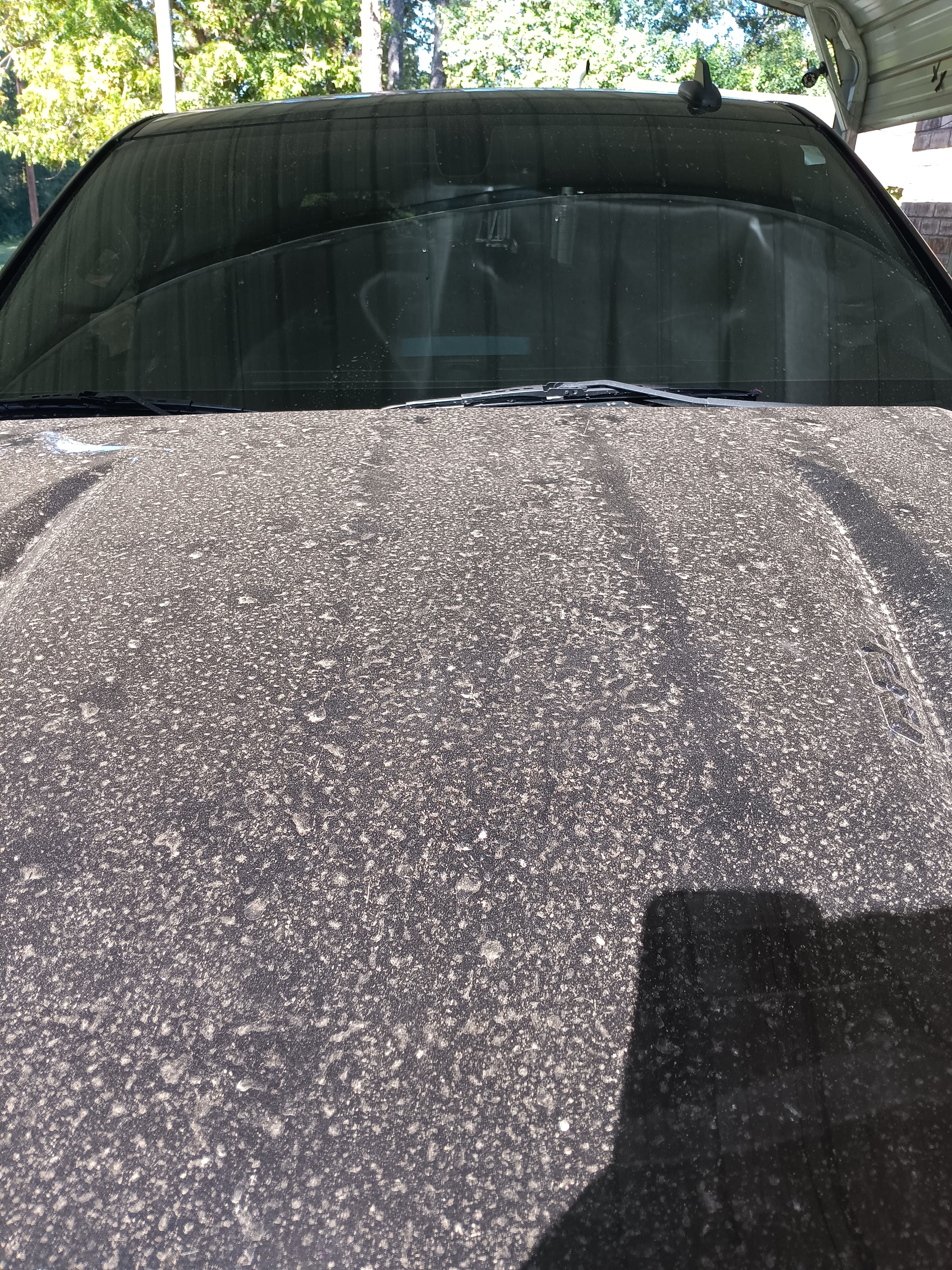
The security camera outside Patricia McGhee’s home captures a scene that she says replays again and again in her Mississippi neighborhood, especially at night. Dust drifts slowly from the sky, settling over her yard.
She and other residents of Gloster, Mississippi, blame the fugitive dust on a nearby wood pellet plant, Amite BioEnergy, owned by the U.K.-based bioenergy giant Drax. The company exports pellets overseas as a “green” energy source that helps governments meet their carbon reduction goals.
Community members blame the plant not only for coating their homes with a layer of grime, but for releasing toxic emissions they believe have caused asthma, cancer and other health problems.
The dust “comes through my vents and gives me headaches,” said McGhee, who lives about a mile from the plant.
Gloster residents first raised concerns about Drax in 2020 when the Mississippi Department of Environmental Quality fined the facility $2.5 million for underestimating its releases of chemicals called volatile organic compounds, or VOCs.
Today, amid ongoing scientific studies, pleas for stronger regulation and a pending lawsuit, residents say they are still looking for justice — and relief from pollution they believe has sickened their community. Their alarm reached a new height in October, when Mississippi regulators granted the facility a “major source” permit, allowing Amite BioEnergy to increase its emissions of toxic air pollutants.
“It was really disheartening,” Krystal Martin, a Gloster resident and community organizer, said about the permit decision. Martin described recent nights when the town looked like the “wild, wild west” because of how dust blew through the air.

Jimmy Brown, who lives roughly half a mile from the plant, shared pictures of his car hood covered with light, powdery marks.
“I don’t think [Drax’s emissions limit] should be increased just because they can’t stay where they’re supposed to be,” Brown said at the October permit hearing, referring to the company’s past violations.
Local and state officials hold up the facility as a shining example of development in a poor, rural area. But recent investigations have shown the company has a history of dubious environmental promises. Last year, The Examination, the Toronto Star and Mississippi Today found that Drax received $762 million in reduced-interest “green” loans to encourage climate-friendly practices. Most climate scientists, however, argue that using wood pellets for energy is a “false solution” that is more harmful to the planet than coal or gas.
Shortly after the company received its new permit, a group from Gloster filed a lawsuit in federal court accusing Drax of damaging residents’ property and health through its air emissions. The case is pending.
On Jan. 19, a Democratic state representative introduced a bill to improve the government’s tracking of toxic air pollutants and to update pollution control requirements for facilities such as Amite BioEnergy. The bill will need to be passed by a committee by Tuesday.
Drax officials said the facility’s production hasn’t increased since the permit decision, but added that they expect output to eventually increase by about 17%, to an average of 525,000 oven-dried tons of wood pellets per year. A screen added to the plant in 2024 is designed to ensure no dust leaves the plant, Drax spokesperson Michelli Martin said, adding that the pollution witnessed by residents may come from other companies.
“It's a highly industrious area,” Martin said. “I know what we're doing with our control mechanisms; I don't know what other industry is doing.”
Few scientific answers

Among the most serious health threats posed by pellet factories come from a category of emissions regulated by the Clean Air Act that are known or suspected to cause cancer, birth defects and other serious health conditions. In 2024, Drax was fined $225,000 for exceeding permitted emission levels of these hazardous air pollutants, or HAPs, at the Amite BioEnergy facility. That fine came on top of the previous $2.5 million penalty for emissions of VOCs.
Patrick Anderson, an attorney with the Southern Environmental Law Center who specializes in air pollution issues, singled out six chemicals of concern that fall under both classifications: methanol, formaldehyde, acetaldehyde, acrolein, phenol and propionaldehyde. He said emissions of these dangerous chemicals are likely to increase if production levels are ramped up.
The main study underway in the region is through Brown University — funded in part by a $5.8 million grant from the National Institutes of Health — which was described as a way of finding out what was causing residents' ailments.
At the time, lead investigator Erica Walker said the research provided an opportunity to “actually spell out what these environmental externalities are and to what extent they may negatively impact the health and well-being of the surrounding community.”
Over the course of 2025, the Brown team has posted air monitoring results for several broad categories of air pollution in Gloster — as well as in five other communities in the region. The sites were selected based on “proximity to industrial activity specific to Mississippi,” which includes, but is not limited to, wood pellet factories, Walker told The Examination and Mississippi Today,
Subscribe to our newsletter
Their air quality monitoring data in Gloster in the second and third quarters of 2025 showed readings that were within federal limits for ozone and for fine particulate matter, known as PM 2.5. Levels of VOCs, which do not have a uniform legal limit, increased slightly in the third quarter.
But the monitoring data has not specified results for the dangerous chemicals that Anderson said represent the greatest threats from wood pellet production. He said more detailed information is needed to assess whether dust and chemical emissions from the Drax facility are harming people’s health in Gloster.
Last year, Brown’s team stopped working with Greater Greener Gloster, a community group that had assisted with local health surveys — a split that could further threaten the prospects of residents obtaining the scientific answers they are seeking.
Walker declined to answer why Brown had ended the partnership. “We have made a commitment to the Gloster community and will honor that commitment until we can’t,” she said.
Lawsuits and legislation
Hours after the state awarded Drax’s new permit in October, a group of Gloster residents filed the federal lawsuit against the company. The residents don’t have to prove that Drax’s releases caused illness in order to win compensation, said Knut Johnson, an attorney with Singleton Schreiber representing the plaintiffs.
“The first question is, is there someone who has cancer because of [the plant’s releases]? That’s something we may not know for years and years,” Johnson said. “But are there people who are suffering from anxiety and concern because Drax dumped cancer-causing chemicals all over them? Yeah, and those are the harms that the law says can be compensated for that nuisance and trespass.”
Drax filed a motion to dismiss the case, arguing that residents had failed to show specific injuries that were caused by the Amite BioEnergy facility. Moving forward, the company plans to be “more proactive” in telling the public what actually happens at the facility, Deidra Jackson, Drax’s senior vice president of corporate affairs for North America, said in a recent interview.
“I know that I can certainly work to rebuild the trust with the people in the Amite County area,” Jackson said. “I understand it won’t be an easy road, but it will be a worthwhile road and I’m committed to doing it.”
State Rep. Zakiya Summers, a Democrat from Jackson, said she started following the Gloster situation as a graduate student and hopes to strengthen Mississippi’s laws around air quality.
Summers introduced her bill this month to “provide accountability” around toxic air pollutants in the state. The proposal, a version of which died in the House Conservation and Water Resources Committee last year, would require the Mississippi Department of Environmental Quality to review and update regulations for toxic air pollutants to ensure facilities have sufficient control measures in place.
She acknowledged it may be a heavy lift to get the bill passed because of the lack of knowledge around the issue and powerful lobbying groups from the lumber industry. The idea, though, isn’t to target only wood pellet plants, she said.
“It’s an opportunity to make sure Mississippi is being proactive around making sure we have good air quality and then providing some accountability,” Summers said.
Connecting the dots between air emissions and health impacts is a challenge, especially with a newer industry with as little data as the wood pellet business, said Caroline Frischmon, a researcher at the University of Colorado Boulder.
Frischmon recently published research on air quality complaints in Pascagoula, Mississippi, and is in early conversations with Martin’s group in Gloster about potential air monitoring there. She said it was disappointing the state hadn’t done more to investigate the impact of Drax’s emissions in the small town. The type of data collection that can lead to regulatory actions is cost-prohibitive for most communities, even with the help of grant-funded universities, she said.
“ Mississippi doesn't seem to have that level of investment to be able to respond to community reports like this in a way that can actually get the data that they need to understand what it is they're breathing from these industries,” Frischmon said.