This story was published in collaboration with Bhekisisa Centre for Health Journalism.
The public service announcement that aired on South African radio in October 2024 didn’t mince words.
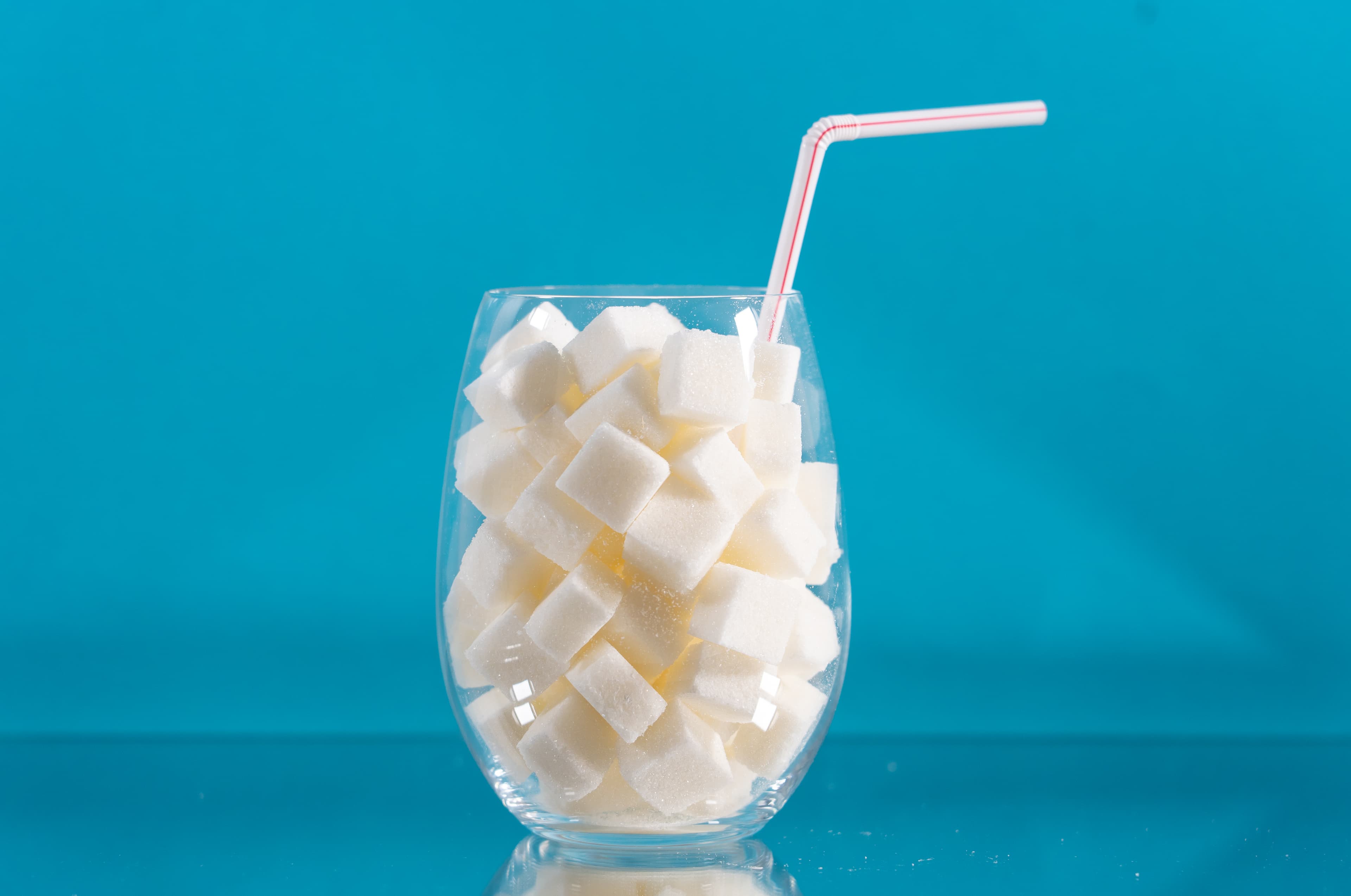
“Fizzy drinks and fruit juice make our children sick,” a speaker said in Afrikaans. With every sip, the ad continued, sugar is dumped into their bodies, “leading to obesity, heart disease and diabetes as they age.” Listeners were then urged to support a stronger tax on sugary drinks.
Two months after the ad first appeared, an industry-funded advertising oversight body, the Advertising Regulatory Board, told major broadcasters not to air it in its current form. A parent had complained to the ARB that the ad made his daughter believe her school “was trying to poison” students because fruit juice was served with lunch every day.
The ARB said it had determined that the ad in its original form was misleading because it created the false impression that any sugary drink consumption will cause disease.
The group that created the ad, a South African health nonprofit called HEALA, unsuccessfully appealed the regulatory board's ruling to two ARB appeals committees, asserting that the advertisement should be allowed as it makes a factual, evidence-based public health claim.
The nonprofit said it will take its case to the High Court in Johannesburg, one of the major courts across the country that oversee civil and criminal cases, for review in March. In the meantime, the group has run an edited version of the ad that includes the qualifier “could” before the assertion that sugary drinks make people sick.
“We are being blocked from running a public service announcement or a public health message by a group that is then funded by the very people whose products are being impugned,” Petronell Kruger, program director of HEALA, told The Examination.
The dispute over the HEALA advertising comes as South Africa is confronting a worsening epidemic of diet-related disease. In the last decade alone, the obesity rate among children younger than five has nearly doubled. Diabetes and other noncommunicable diseases account for an increasing number of deaths. The health crisis has brought new attention to the advertising of unhealthy foods – especially ads directed at children.
The ARB’s mandate is to ensure that advertising in South Africa is “factual, honest and decent,” by enforcing a code developed with industry. Although its rulings technically apply only to members, the country’s Electronic Communications Act requires major broadcasters to adhere to this code and follow its rulings. As a result, if the board blocks an ad, there’s a high chance that much of the country’s population will neither hear or see it.
A review of more than 700 ARB decisions by The Examination found that the board has intervened to challenge or weaken public health messaging in advertisements on multiple occasions while declining to block advertisements for products aimed at children — actions that critics contend reflect a pro-industry bias.
At the same, the ARB has fought to keep its place as the advertising industry’s de facto regulator, and has pushed back on proposed regulations that its members oppose. Adopting language that echoes the positions of its financial backers, it has worked to block front-of-pack labelling on unhealthy foods and weaken proposed legislation that would limit vape advertising.
In recent years the board has ruled in favor of industry in cases involving the marketing of sugary drinks to kids by associating them with popular athletes and Barbie, and blocked an advertisement from the Department of Health that warns consumers about the harms of excess sugar.
‘A very strange funding system’
Unlike a levy or membership fee employed by many self-regulatory bodies globally, the ARB directly asks major companies like Coca-Cola, PepsiCo, and KFC to pay what they can to keep the organization afloat. All told, about a third of the board’s funding comes from food and beverage companies.
Critics say the presence of industry players and absence of public health expertise on the board represents an inherently flawed design.
“A reasonable person just looking at who funds them would be bound to have doubts,” said Yolanda Radu, a senior researcher at the South African Medical Research Council’s unit on health. “And I think that presents a conflict of interest of sorts, especially when it comes to public health messaging.”
Gail Schimmel, CEO of the ARB, acknowledges that the group has “a very strange funding system.”
“You cannot think of a criticism of this model that I have not already thought of,” Schimmel said in an interview. To claims of bias, however, Schimmel said the history of the organization's rulings prove otherwise. “If you look at our decisions, you will see that we rule against funders.”
The ARB issues rulings on about 100 consumer complaints each year. Many deal with mundane complaints about a misleading ad – whether a box of chicken contained the advertised amount of pieces, for example.
Some of those rulings have, in fact, been contrary to corporate interests. The ARB told TotalEnergies, a large oil company, that it could not boast of its sustainability practices in ads promoting its partnership with the body that manages South Africa’s national parks. It decreed that a bread company could not claim its products were more nutritious than comparable bread products without substantiation — and ruled against a vape company because of its relationship with social media influencers promoting its products to minors.
Harris Steinman, a medical doctor and CEO of FACTS, a food and allergy consulting and testing service in South Africa, said the board “tries to do the right thing.” Since 2019, Steinman has submitted up to 20 complaints to the board about allegedly misleading industry advertising, including the use of junk science to sell weight loss supplements. On several occasions, the ARB ruled in his favor, blocking such advertisements from being carried by major broadcasters, Steinman said.
But most public health experts interviewed by The Examination said the ARB’s funding model, the presence of industry players and absence of public health expertise on the board undermine the board’s claims of independence.
“I think the fact that industry funds the group that's designed to develop and then implement and enforce the codes raises lots of questions,” said Janet Hoek, a professor of public health at New Zealand’s University of Otago.
The Examination asked public health experts to review the ARB’s codes on marketing of vapes and food and beverage products. Some pointed out that the codes contain loopholes and ultimately aren’t comprehensive enough. For example, the code bans vape companies from using the term “safer than” cigarettes, but allows them to say that vapes are “less harmful.”
In 2023 a consumer complained that a campaign called “Vaping Saves Lives” was misleading and targeted younger consumers in order to sell more vapes. The board upheld the complaint and warned advertisers to “veer on the side of caution in communication around the health benefits of vaping,” but noted that advertisers could accurately claim that vaping is less harmful than cigarettes — although evidence on this is not conclusive.
“I think it's really problematic to disallow one form of wording when there are so many synonyms available,” Hoek said. “You know, all it does is to open up the floodgate that advertising creators will be very happy to fill.”
The ARB’s food and beverage code says ads “should not encourage poor nutritional habits or an unhealthy lifestyle in children.”
But in 2024, the board ruled that using Barbie on a bottle of sugary chocolate milk was permissible, as its code prohibited the use of characters in TV ads aimed at young children, but had no such restrictions around packaging. The board noted that while the product was indeed intended to appeal to children, it “makes no claims that are designed to induce a child to persuade their parents or others to buy the product.”
In response to the complaint that the ARB’s code should guard against companies marketing products with high levels of added sugar to children, the board wrote that there was “simply no basis in its Code to support such an interpretation.”
Late last year, a consumer made a similar complaint about a Coca-Cola campaign in partnership with South African rugby players. The complaint said the company’s ads, which flanked mall escalators, targeted children and created the impression that sugary drinks are “associated with healthy athletes.” The board ruled in favor of Coca-Cola and dismissed the complaint.
Tamryn Frank, a public health researcher at the University of Western Cape in Cape Town, told The Examination via email that “despite the ARB’s existing Food and Beverage code, unhealthy, ultra-processed products are regularly advertised to children” in South Africa. She cited a study that found unhealthy foods were advertised more than three times as often as healthy foods on television during times when children and families were viewing.
A better model, public health experts said, would have the government oversee health-related ads, as is the case in many countries.
The South African parliament is currently considering legislation that would restrict food, tobacco and vape companies from marketing unhealthy products to children and would give the Department of Health the final authority over these issues, not the ARB.
The ARB, however, has been urging the government to temper some of its proposals.
When the government in 2023 proposed introducing labels to warn consumers about foods high in sugar, salt, and fat and restrict marketing of unhealthy products to children, Schimmel, representing the ARB, called the evidence for food marketing restrictions weak. “Food advertising restrictions should … not be seen as a silver bullet to the childhood obesity problem,” she wrote in her submission to the government.
In her submission, Schimmel urged the government to reconsider 18 as the proposed age limit at which food marketing restrictions should apply and lower it to 13, which is in line with the ARB’s own code of advertising. Schimmel also wrote that sections of the bill, which deal with advertising to children, endorsements and imagery permitted on foodstuffs, should be regulated by the ARB and only referred to the department of health when advertisers fail to comply.
The ARB made a similar request to the government last year as the parliamentary health committee discussed a bill, still under consideration, that would ban both tobacco and vape advertising. The ARB, which boasts the CEO of the vaping industry group Vapour Products Association of South Africa as a member of its board, also asked the government to make a distinction in the tobacco bill between how vapes and traditional cigarettes can be advertised.
“It is not appropriate for the [vapes] to be paralleled with traditional tobacco products for the purposes of advertising,” Schimmel said. “They need to be treated with a nuance that is justified by their health benefits.” Research shows questions still remain about the risks and benefits of vaping.
An independent body trying ‘to do the right thing’
The 14 members of the ARB’s two appeals committees include a judge and a senior lawyer who serve as independent parties, and marketing executives with decades of experience between them. Three appeal committee members are currently employed by major alcohol companies, while two have worked with national and international beverage companies in the past.
Schimmel said that when the committee is considering cases where there might be an apparent conflict of interest, members can recuse themselves, but said it seldom happens and defended the inclusion of members with experience from those industries.
“You want people who understand the industry that the claim is from,” Schimmel said. “It's helpful having people who understand an industry on the decision-making body about that decision. I don't think it's a conflict. I think it's an addition.”
Among those on the appeal panel for the HEALA case was Martin Neethling, a former executive at PepsiCo South Africa and Pioneer Foods who represented the South African Fruit Juice Association in committee discussions with the government about whether juice should be taxed.
When asked if Neethling’s inclusion in HEALA’s committee hearing posed a conflict of interest, Schimmel said that if the board had received a request for Neethling to recuse himself, it would have agreed. She pointed out that Neethling, like other members, is listed on the website with his bio easily accessible.
Kruger, HEALA’s program director, said her organization didn’t know who was on the committee until they received a Zoom invitation to join the hearing.
Neethling did not respond to a request for comment.
How much sugar is too much?
One of the ARB’s main arguments in upholding its ban of HEALA’s original advertisement is that even public health institutions like the World Health Organization don’t condemn sugar completely.
The ARB’s response to HEALA’s appeal cites Francesco Branca, a former WHO nutrition and food safety director, who said that while people don’t need sugar in their diet, they should consume “less than a single serving (at least 250 ml) of commonly consumed sugary drinks per day.”
Branca told The Examination via email that the point of his statement is that sugar is not necessary. He said that in a country like South Africa, consumption of sugar should indeed be drastically reduced. “I think HEALA's advert communicates the presence of a high risk associated with consumption of sugars, which is perfectly appropriate to the situation.”
While the government deliberates on who has the final say about public-health related messaging, the ARB continues to fill the regulatory void by policing all types of advertising — even the government’s.
Last year, the regulatory board blocked a public service ad from the Department of Health warning about the harms of sugar after a viewer complained of confusing messaging. The health department did not return a request for comment.