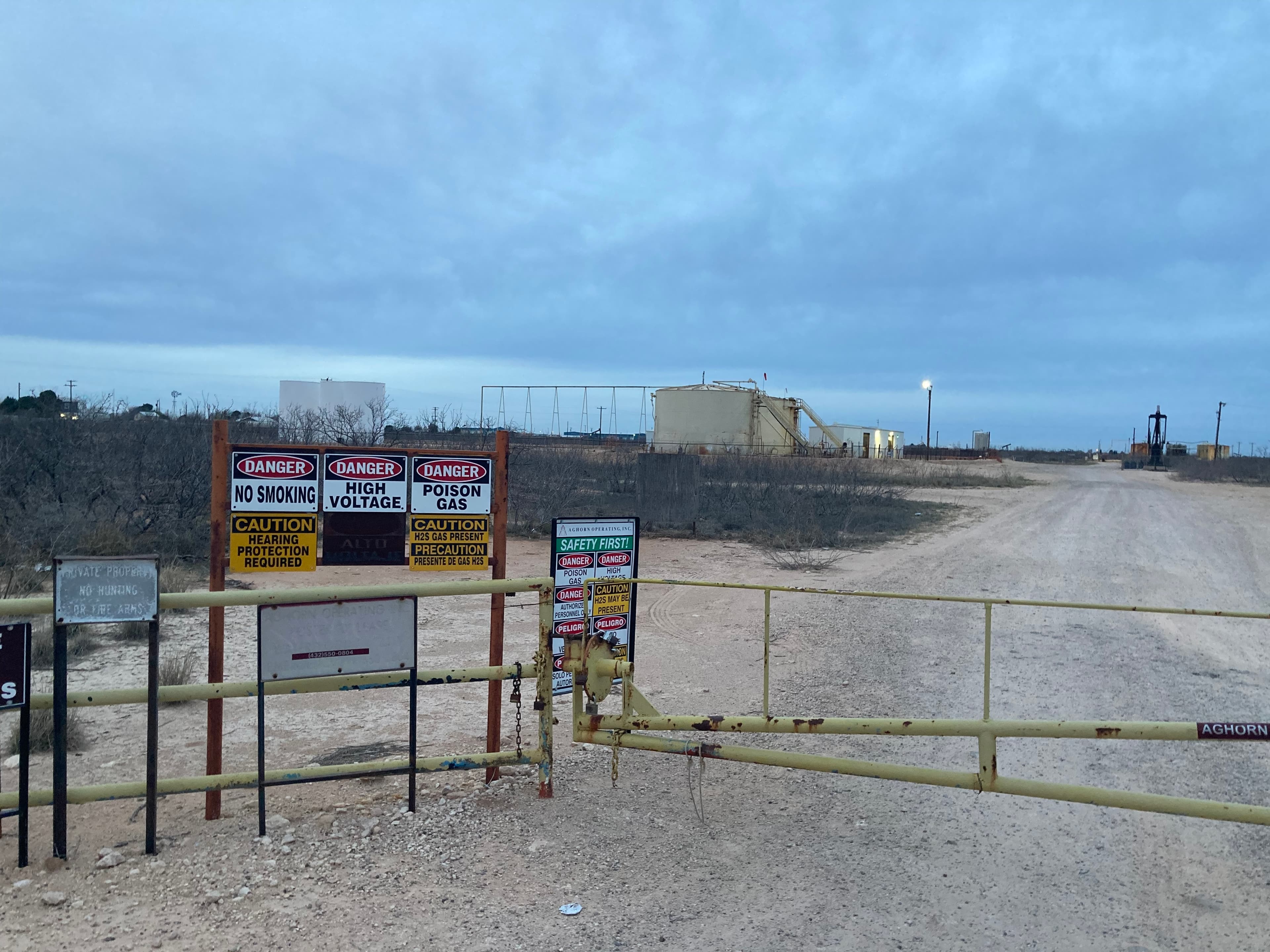
When Rachel Curtis visited her 86-year-old grandmother in Odessa, Texas, last summer, the putrid odor of hydrogen sulfide hit her as soon as she got out of the car.
She could smell the toxic gas, which is often compared to rotten eggs and is fatal in high concentrations, inside her grandmother’s house. Her grandmother has lived about 50 yards from an oil pumpjack for decades and was used to the smell, but she was suffering from frequent headaches — a common effect of exposure to hydrogen sulfide, or H2S.
Worried about her grandmother’s health, Curtis grew even more upset when she found out who operates the pumpjack and other oil equipment nearby: Aghorn Operating. The company had recently pleaded guilty to criminal health and safety violations related to the 2019 deaths of an employee, Jacob Dean, and his wife, Natalee — who were killed by a cloud of hydrogen sulfide inside a nearby Aghorn pumphouse.
After the deaths, Curtis felt both Aghorn and authorities should be keeping better tabs on all of its facilities.
“It just really ticks me off because, I mean, she's an 86-year-old woman who’s lived across the street from this for how many years,” said Curtis, a high school teacher who had been friendly with the Deans before she moved across the state. “I feel like something should have been done.”
Aghorn and its president, Frosty Gilliam, didn’t respond to calls, emails and detailed questions.
In a court filing last year, Aghorn stated that since the 2019 deaths, the company had hired a full-time safety manager, established written safety policies, conducted hydrogen sulfide safety training and upgraded monitors and alarms for the gas in various facilities. “Aghorn has substantially improved the safety of its facilities and instituted measures to ensure the safety of its employees and the general public,” it said.
Often called “sour gas,” hydrogen sulfide forms naturally underground in some oil-rich regions of the world and can get released into the air during oil production. It can also escape from badly sealed equipment. Low levels of the gas can irritate the eyes and respiratory system and chronic exposure has been associated with neurological problems like fatigue, impaired memory, headaches and dizziness.
As The Examination and the Houston Chronicle detailed in a 2024 investigation, tens of thousands of Texans live near hydrogen sulfide hotspots, but despite community complaints of exposure, state regulators have largely failed to hold companies accountable. When investigators find the gas seeping into the air, companies usually get what amounts to a fix-it ticket, often without any penalty. Problems can persist for years.
That pattern has continued with Aghorn, despite the deaths in the heart of the Permian Basin.
What to know about hydrogen sulfide leaks in Texas
In 2019, Dean was checking on some malfunctioning equipment inside an Aghorn facility when he collapsed in a cloud of hydrogen sulfide. Natalee went looking for him and died next to him. Their kids, then 6 and 9, were sitting in the car outside.
Federal prosecutors charged Aghorn with willfully violating worker safety laws, causing the death of an employee, as well as obstruction and false statements. They added a conspiracy charge, alleging a widespread practice, continuing to 2024, of putting profits and convenience above human health and safety.
Prosecutors documented a pattern of chronic leaks and unsafe practices that continued years after the Deans’ deaths. “At Aghorn,” they wrote in a 2024 filing, “placing workers, contractors, and the public at risk was a way of doing business that was deeply ingrained in the corporate culture.”
The company pleaded guilty last year to the more limited charges of negligent endangerment and willful violation of safety laws, paying a $1 million fine. As part of the plea deal, Aghorn admitted its failure to implement workplace protections was a cause of Jacob Dean’s death and that its representatives “had neglected to control H2S emissions and provide adequate safety systems, which negligence placed Natalee Dean in imminent danger of death.” The company’s vice president, Trent Day, was sentenced to five months in prison.
Industry consultant Jim Kirksey, who reviewed the evidence for prosecutors, wrote in a report filed in the case that Aghorn mostly ignored health and safety complaints, and that the state’s oil regulator, the Texas Railroad Commission, was slow to act.
“The residents who live or work near Aghorn Operating facilities are the innocent victims of Aghorn Operating non-compliance with H2S safety regulations,” Kirksey wrote in his 2024 report, noting that complaints of headaches and nausea were commonplace. Aghorn objected to Kirksey’s qualifications in court filings.
Shortly after that report was written, Adrianna Yanez, a mother of four who lives about 11 miles west of Curtis on the outskirts of Odessa, complained to regulators about hydrogen sulfide leaks wafting toward her home that she said caused bad headaches and bouts of vomiting.
Inspectors from the Texas Commission on Environmental Quality found gas leaking from an Aghorn pumpjack just over 100 meters from her house. The company patched it, and TCEQ resolved the complaint with no penalty, records show.
The Railroad Commission then found gas leaking from storage tanks and an unlit flare about a third of a mile away and told Aghorn to fix it. Investigators came back twice and found gas still leaking. On the fourth visit, in early 2025, they didn’t see any leaks and closed the investigation.
The smell went away for a few months, Yanez said, and then it came back.
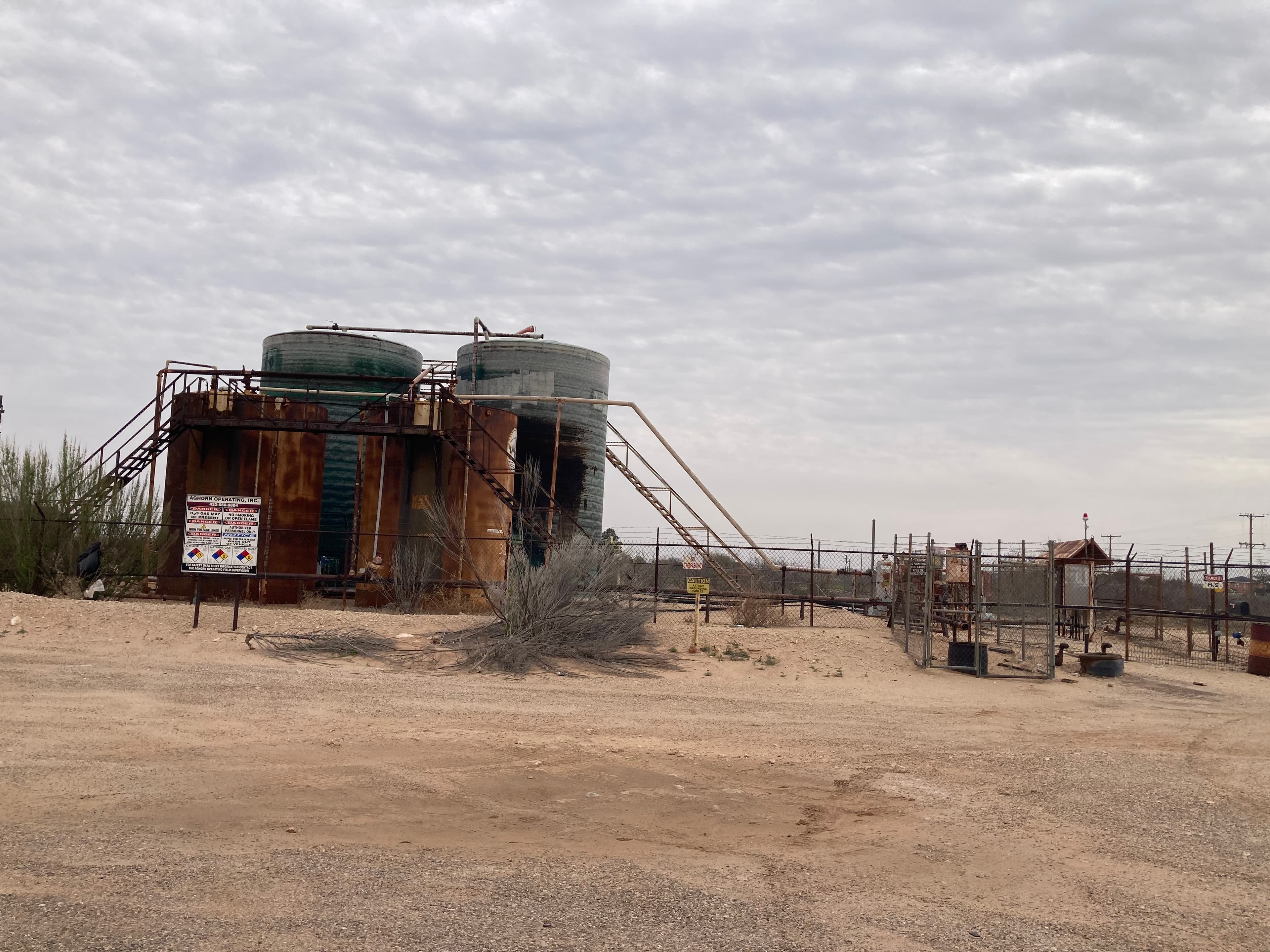
“It’s really sad because I guess they see us as the poor people who live out here on the west side of Odessa and they could care less about our health or our children,” Yanez told The Examination recently.
The Railroad Commission didn’t respond to questions about its oversight of Aghorn. Commission spokesperson Bryce Dubee said in a statement that inspectors conduct daily inspections at facilities throughout the state and if there are violations, “they are inspected until addressed and compliance has been met.”
“Public safety matters related to H2S are always a high priority for the Railroad Commission,” Dubee said.
Subscribe to our newsletter
Global health reporting, straight to your inbox
TCEQ spokesperson Laura Lopez said in a statement that the agency has a network of monitoring stations to help address air quality concerns. In 2021, she noted, the Odessa monitoring station picked up elevated levels of hydrogen sulfide and TCEQ investigated. The agency found leaks at various Aghorn locations, including the one near where Yanez lives. Lopez said the president of the company was notified and the leak was fixed, which resolved the violation. TCEQ didn’t respond to questions about whether repeated problems with no penalties is an effective enforcement strategy.
Jon Rosenthal, a Democratic Texas state legislator running for a seat on the Railroad Commission next month, said the commission needs more resources to effectively oversee the state’s myriad oil sites, and should incentivize companies that are playing by the rules by lowering permitting costs and making the process easier. As for Aghorn, he said, “If they are seeking dollars at the expense of people's lives, then we have to stop them.”
“My gut reaction is shut these people down until they demonstrate that they've got it cleaned up,” he added.
Some Texas lawmakers said they would file legislation to better protect the public from hydrogen sulfide after The Examination’s 2024 investigation. Rep. Ron Reynolds, a Missouri City Democrat, introduced a bill last year to strengthen the state limit on hydrogen sulfide in the air, but it stalled in committee. Democrat State Sen. Judith Zaffirini’s legislation, directing the state to study the health risks of hydrogen sulfide and recommend actions, also died in committee last year.
“We live in a state where oil and gas is very powerful and it’s hard to pass anything that adds regulations,” said Cyrus Reed, legislative and conservation director for the Sierra Club’s Lone Star chapter. Reed worked with legislators who succeeded last year in adding a provision to the state budget requiring the Railroad Commission to map out wells with high hydrogen sulfide levels.
Zaffirini said she hopes to introduce legislation again next year.
“We must continue working to improve monitoring, oversight and transparency regarding hydrogen sulfide leaks because the health and safety of Texans are at stake,” Zaffirini said in a statement.
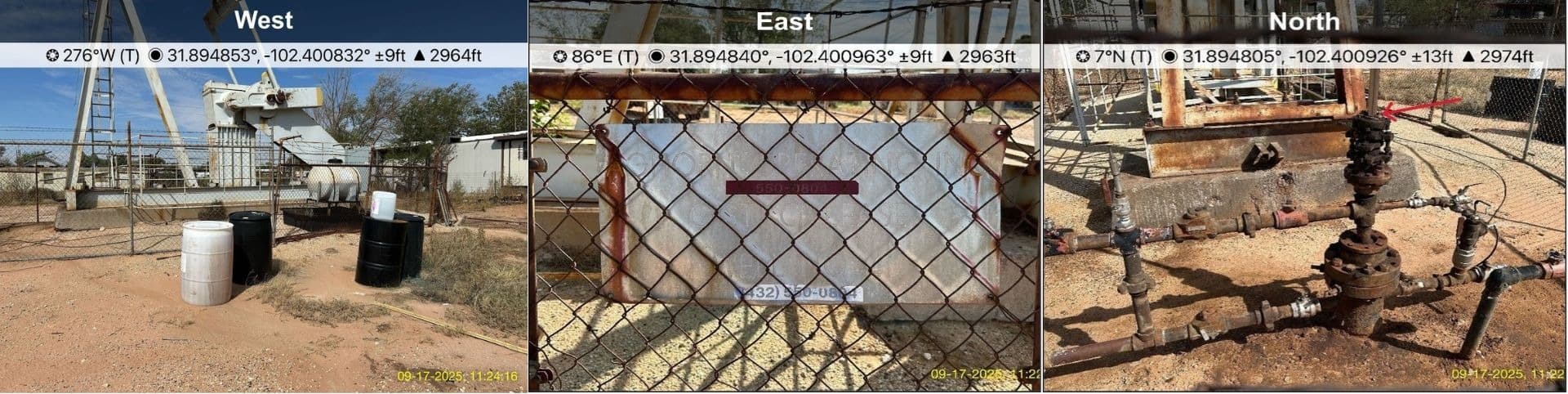
After visiting her grandmother last year, Curtis complained to regulators about the gas. A Railroad Commission inspector found a small leak at the nearby Aghorn wellhead, as well as barrels and a container of chemicals sitting outside the well’s fence. Those issues were fixed by the next inspection two months later. By that time, though, another neighbor had complained and inspectors found more gas leaks from Aghorn’s storage tanks on the other side of Curtis’ grandmother’s property. Subsequent inspections at that site didn’t find problems, but inspectors found violations at other Aghorn sites since then, including a hydrogen sulfide violation last month near an elementary school.
“There needs to be accountability on every level,” Curtis said, “not just with Aghorn.”