This story is part of the Flaring Front Lines project, an investigative collaboration involving The Examination and Bloomberg News. Sign up for the Green Daily newsletter.
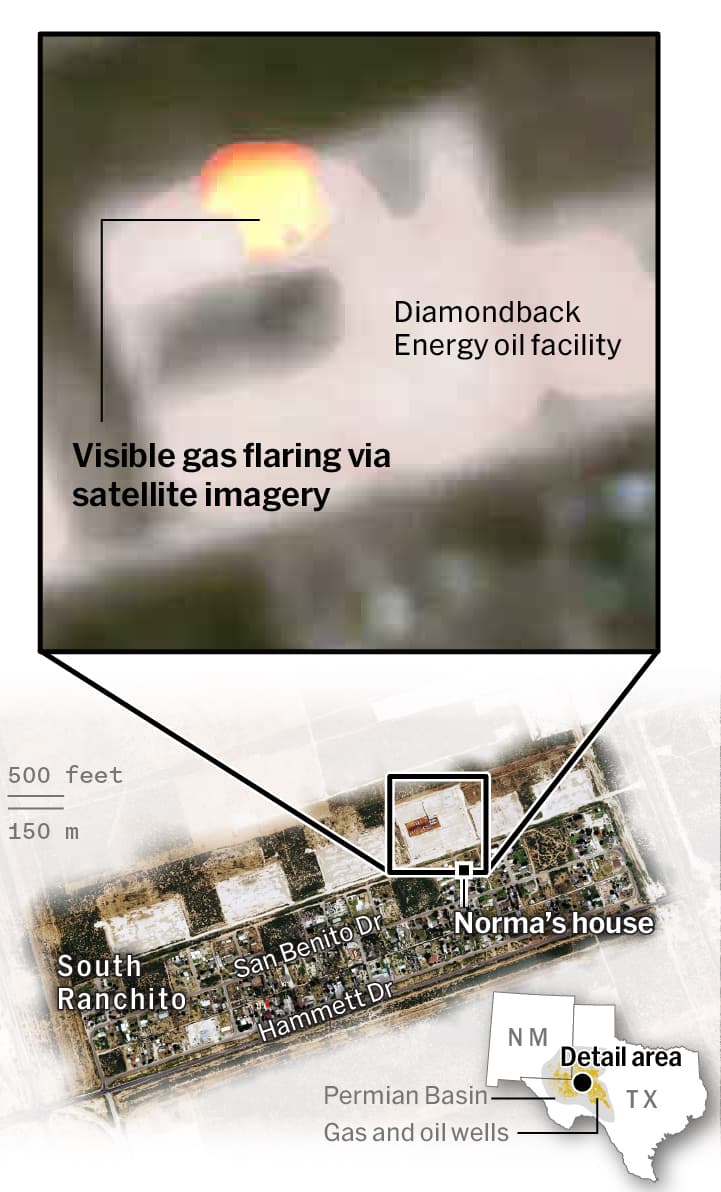
Norma Lopez Cadena tries to keep her granddaughters indoors — out of sight from the 65-foot flare burning excess gas from more than a dozen oil wells.
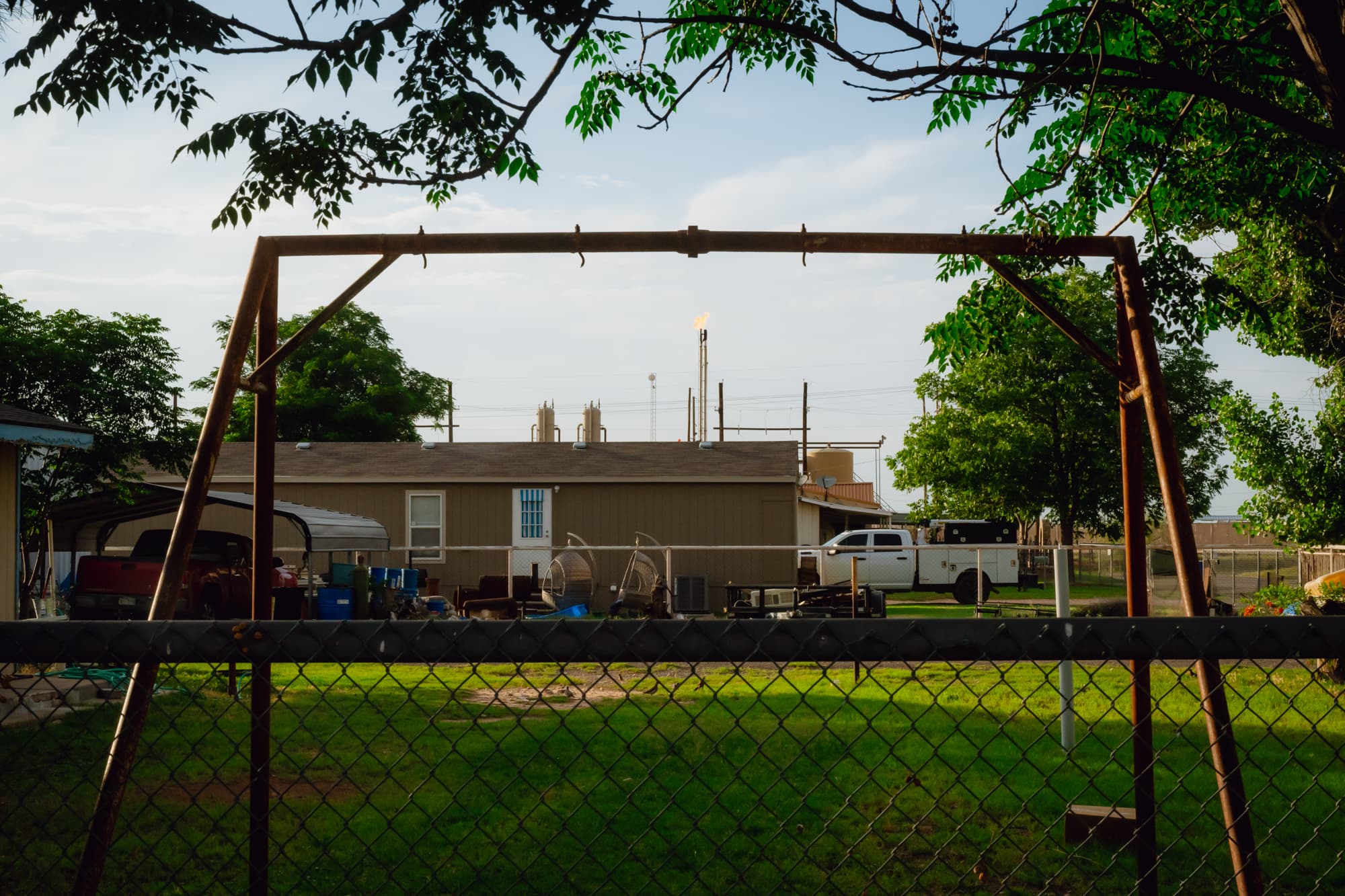
At night, she says, the flare rattles the house from about 500 feet away and wakes her family. When the wind shifts, it smells like burnt rubber. The flare tormenting Lopez Cadena towers over the quiet West Texas neighborhood of South Ranchito, in the heart of the oil-producing Permian Basin, where it dances in the breeze day after day like an oversized lighter. When the gas flow increases, it swells into a thick yellow and sounds like a blowtorch.
“Nobody wants to live next to that,” she says.

Scenes like this were supposed to become increasingly rare. For more than a decade, oil companies have pledged to eventually eliminate what the industry terms “routine flaring” – burning gas because producers consider it too costly or difficult to capture, sell or reinject underground.
Diamondback Energy, a Permian Basin producer valued by investors at about $51 billion, installed this flare in 2024. Soon thereafter, it became one of the first major oil companies in the world to say it had eliminated routine flaring, using a definition hashed out by the World Bank and some of the industry’s biggest players. Diamondback sometimes even cuts oil production – and sacrifices revenue – to avoid flaring, according to its sustainability report, as a way to “set the example” for the industry.
Sixty companies have signed on to the World Bank’s “Zero Routine Flaring” commitment to eliminate the practice by 2030, making it the primary global effort to stem the widespread problem. And even non-signatories like Diamondback have embraced the voluntary standards. Some who have joined the pact, such as Shell, claim to have already met the target. Others, including ExxonMobil and BP, say they’ve done so in certain regions.
The promise to curb routine flaring by 2030 has become a common refrain among companies touting their sustainability efforts. Several oil giants have used it to push governments for more lenient regulations. Those claims mask a voluntary system riddled with loopholes that has made scant progress toward stamping out one of the oil industry's dirtiest practices. The industry helped shape the initiative, which leaves companies to police themselves.
From the Niger Delta to the Omani desert to the arid plains of Patagonia, companies are trumpeting success even as their flares burn day in and day out, an investigation by The Examination and Bloomberg News has found.

Flares can burn at more than 2,200 degrees Fahrenheit – hotter than flowing lava. That heat allows satellites far above Earth to detect and measure many of them. A review of 2024 satellite data shows some 2,000 flares at oil fields and drilling sites around the globe were burning in more than half of clear satellite observations.
Hundreds of them are operated by companies that have signed on to the World Bank’s initiative, including several of the world’s biggest oil companies such as Exxon, Occidental Petroleum and TotalEnergies. Even in some oil fields where companies already claimed to have eliminated the practice, satellite data from 2025 and 2026 show flares still ablaze most of the time, according to the analysis by the two news organizations.
Subscribe to our newsletter
Global health reporting, straight to your inbox
In the decade since the initiative launched, World Bank data shows the total amount of gas burned in flares at production sites worldwide has risen 9%.
Many leaders in the oil industry portray reducing flaring as one of the easiest steps it can take to help slow the planet’s steadily warming temperatures, whose primary cause is the burning of fossil fuels. A recent United Nations report signaled that global averages will soon pass 1.5C of warming above pre-industrial levels, with a chance to reach roughly 2.6C in the coming decades without changes to current policies. That would unleash increasingly destructive heat, wildfires, floods and extinctions.
Flaring is a major contributor to global warming and an example of a business-as-usual practice that would need to change to avert the most dire impacts. Thousands of flames at oil sites worldwide burn enough gas each year to supply about half of Europe’s annual gas consumption. The flares also spew soot, nitrogen oxides and other harmful pollutants.
The Zero Routine Flaring initiative is largely funded and steered by the oil industry itself. Internal World Bank documents show officials there privately told Occidental and other oil companies that, essentially, they could keep flaring if it was financially unattractive to stop. Emails between Occidental employees show company officials zeroed in on the initiative’s loopholes before signing on.
“It’s a deliberate greenwash that establishes a target that’s meaningless,” says Richard Ward, a former Shell sustainability manager who later collaborated with World Bank staff while working for an environmental group. “Those loopholes are so big that they don’t have to do anything.”
Occidental officials declined to be interviewed and didn’t respond to detailed questions about its internal emails.
Zubin Bamji, manager of the World Bank’s Global Flaring and Methane Reduction Partnership, which oversees the flaring initiative, said in a statement that the rise in global flaring is disappointing and shows that governments and companies need to take stronger action. But the initiative’s purpose is to increase awareness, transparency and pressure to reduce flaring over time, he said.
Bamji noted that countries endorsing the Zero Routine Flaring pledge had increased flaring, but at a lower rate than non-endorsing countries. “This shows that commitments can make a difference when backed by effective regulation and adequate investment and infrastructure,” Bamji said.
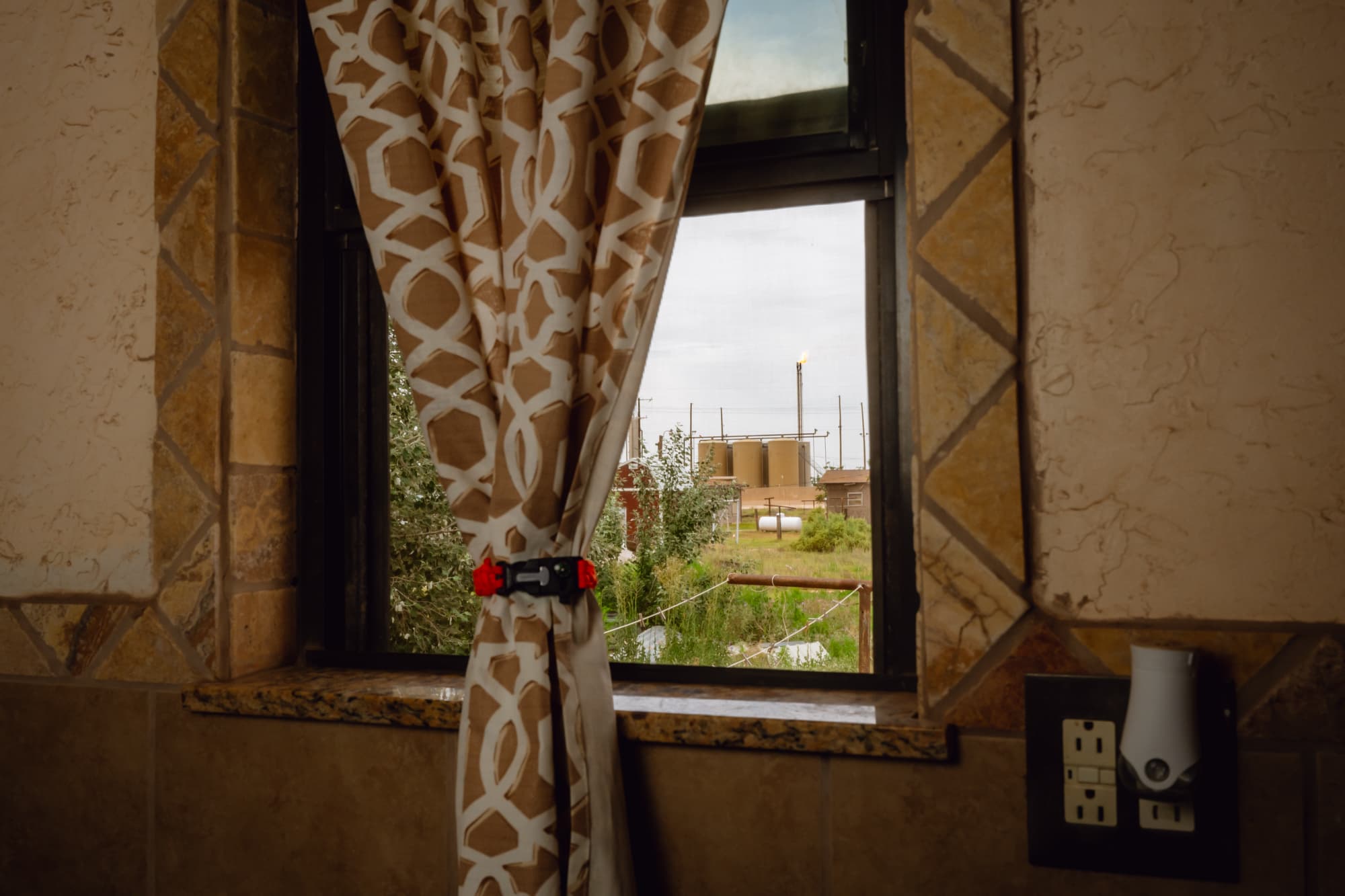
Diamondback’s operations at South Ranchito offer a window into how oil companies can burn gas day after day while saying they have ended routine flaring. The flare there has burned at least 450 days since it started in 2024, according to the company’s filings with Texas regulators. In less than two years, it has incinerated more than 600 million cubic feet of gas — enough gas to power about 3,400 Texas homes over the same time period.
Diamondback officials declined to be interviewed for this article and didn’t respond to numerous written questions about South Ranchito or its flaring claims. In an emailed statement, a company spokesperson said they disagreed with how The Examination and Bloomberg characterized recent flaring in the neighborhood. A spike in flaring late last year was caused by “an unplanned outage on a third-party gas gathering line,” the company said, which doesn’t fall under the definition of routine flaring.
Diamondback makes a similar point in filings to state regulators, where it regularly attributes its flaring at South Ranchito to shortcomings by the gas-collection firm, including insufficient capacity and equipment failures. Despite its public statements about sometimes cutting oil production to avoid flaring, the company tells regulators that flaring here is “necessary” because it “avoids a reduction” in oil output.
One evening in late May, Lopez Cadena, 62, learned about the company’s zero routine flaring claims as she stood in front of the pale green home where she’s lived for over 50 years. The roaring flare nearly drowned out the chirping songbirds. Her face twisted into an incredulous scowl.
“It’s horrible,” she says. “It just changed our whole lives.”
‘This isn’t right’
When crude oil is pumped from the ground, it often comes with large amounts of gas. That gas can be injected back underground to maintain pressure or sent through pipelines as fuel. But oil sites often lack pipeline connections or gas infrastructure can fail. Rather than delay oil production or invest in a solution, companies often incinerate the unwanted gas so they can keep pumping crude.
In the Permian Basin, where the oil boom has repeatedly outrun pipeline construction, the resulting bottlenecks sometimes leave oil producers paying others to take their gas. Flaring here has fallen by more than half from its 2019 peak, but remains 57% higher than a decade ago, according to the World Bank’s satellite data.
The costs fall on places like South Ranchito, which has long offered a quiet haven in one of the most productive oil fields on the planet.
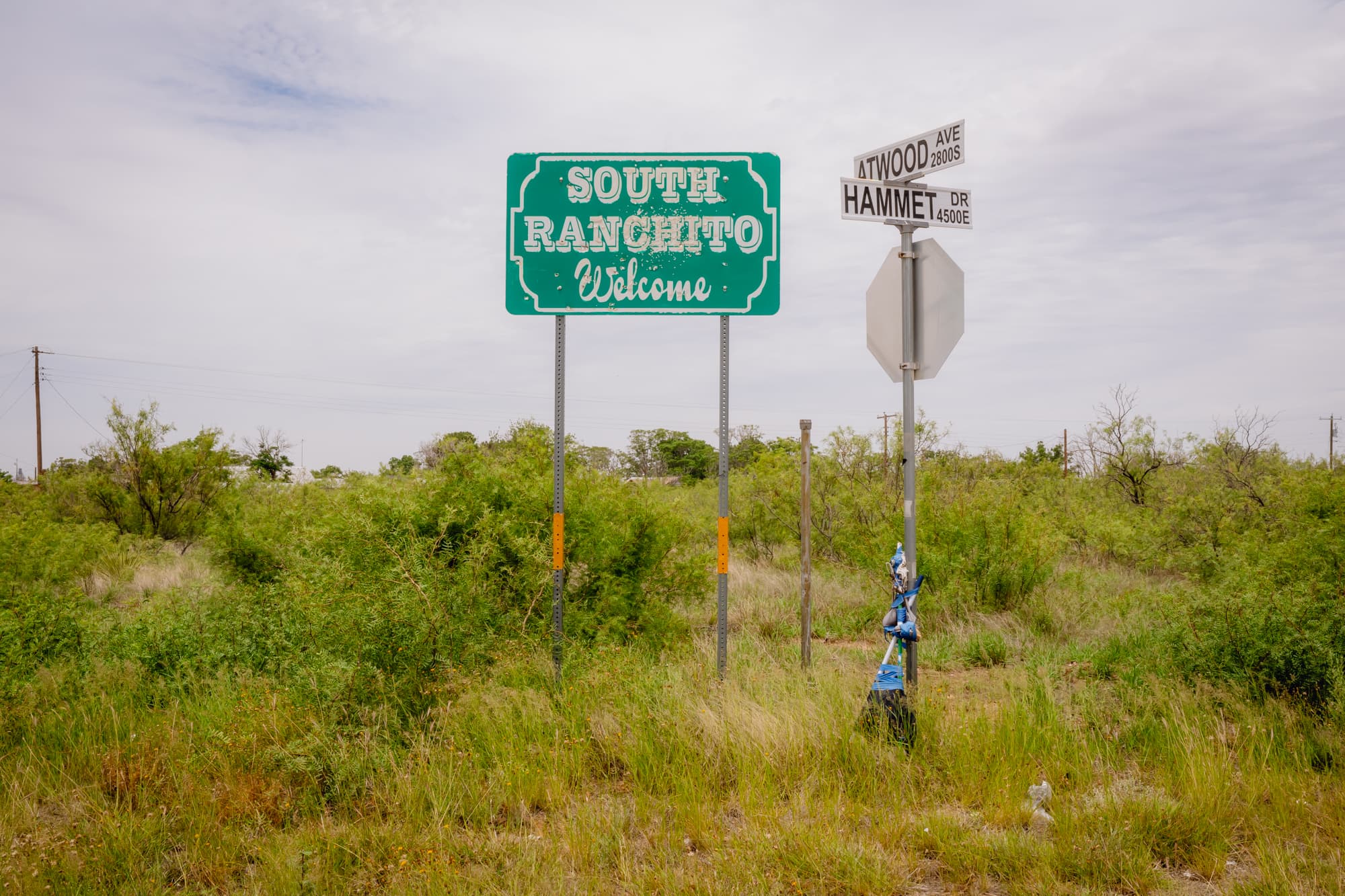
The neighborhood sits just beyond Odessa, surrounded by acres of mesquite brush. A couple of hundred people, most of them Hispanic, live in the mile-long strip of trailer homes and modest ranch-style houses. Yellowing lawns are planted with cantaloupes, and the clucking of chickens pepper the air. Families have stayed for generations. Some work driving delivery trucks, while others are employed as laborers or welders in the surrounding oil fields.
Mystery descended on the community a couple of years ago when bulldozers began clearing the land across the road from the northern edge of the neighborhood. One resident hoped a dollar store was coming. But curiosity turned to concern when drilling rigs, pumpjacks and a flare stack appeared. Oil production is always close by in Odessa, but this was right next door.
Most of the residents know Diamondback. It’s a juggernaut in the area, with more than 9,000 oil wells and rights to drill about one million acres. It’s also a major civic benefactor, contributing millions of dollars for a nearby indoor youth sports center (now dubbed the Diamondback Energy Athletic Complex), a new tennis center and other local charities.
Diamondback has grown rapidly through several major acquisitions, boosting both its oil production and flaring in recent years. It operates scores of flares in the Permian, including the biggest at any U.S. oil production site last year, according to the World Bank's analysis of satellite data. Yet the company awarded top executives bonuses in 2025 for their performance on flaring, including nearly $100,000 for Chief Executive Officer Kaes Van't Hof as part of his $14.9 million compensation package.
Few in the neighborhood knew who was behind the oil operations next door when pumping began in late 2024. Right away, the flare roared like a jet engine, according to multiple videos captured by alarmed residents.
“I’m no tree hugger, but this isn’t right,” says Irad Ibarra, a former oilfield worker who says the flare jolts his South Ranchito house, rattling the windows when it surges in the middle of the night.
When the wind blows in toward the neighborhood, Ibarra and his neighbors say it carries a sharp odor of burning rubber or burning chemicals. Three neighbors complained to state regulators that the flare caused health problems, including trouble breathing.
One of them, Baudilio Ramirez, a 62-year-old who has lived in the neighborhood his entire life, began searching the internet for information on the health effects of flares and isn’t happy about the toxins he’s reading about.

“They’re violating our air space,” says Ramirez.
Flaring spouts particulate matter and smog-forming chemicals that are associated with heart and lung disease. Cancer-causing benzene leaks out, too. Research has shown proximity to flares is linked to premature death, respiratory hospitalizations and preterm births.
“The impacts grow exponentially the closer you are to a flare,” says Daniel Cohan, a professor of civil and environmental engineering at Rice University, who estimates that flares from oil and gas production cause dozens of premature deaths each year in the U.S. “You definitely wouldn’t want anyone living within a few hundred meters of these.”
Many South Ranchito residents live much closer than that to Diamondback’s flare.
‘A good deal of definitional leeway’
When they announced the Zero Routine Flaring by 2030 initiative in 2015, government and industry leaders touted how they were taking a crucial step to slow climate change. But as World Bank officials tried to get more companies to sign on, they privately emphasized that zero didn’t actually mean zero.
In 2018, Bjorn Hamso, who then managed the initiative for the World Bank, pitched Occidental on joining. He emailed the oil producer a presentation that said companies only had to eliminate routine flaring if it was “economically viable.” Companies could consider, for example, how profitable it would be. And it was up to the companies to decide what that meant. “It’s about your assessment – nobody else’s,” the presentation said.
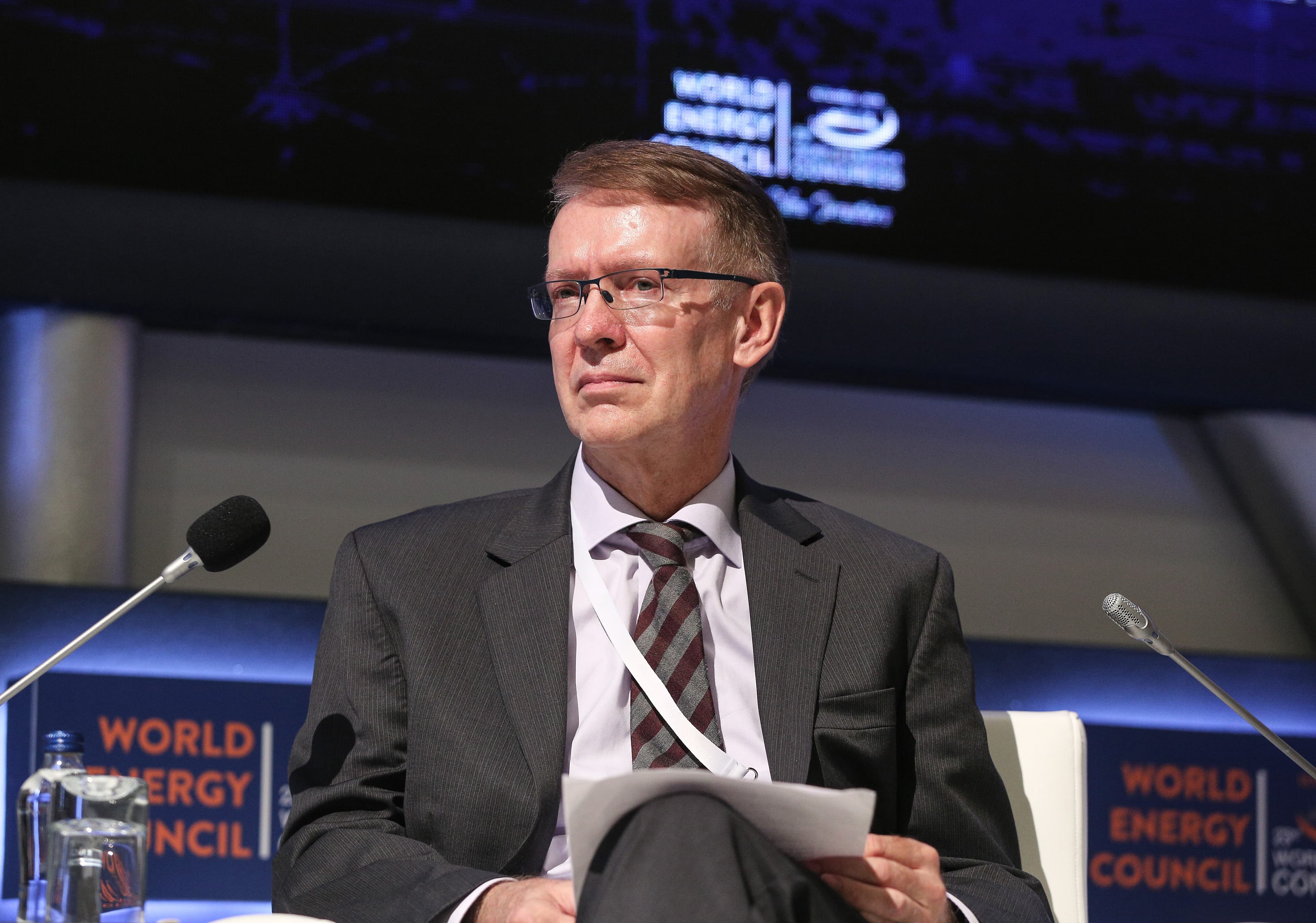
“It’s about seeking solutions – not to end flaring if you can’t,” it added. “Hopefully this will lead to a flare-out solution in the next 13 years, but if it doesn’t, flaring will continue after 2030. That is not a breach of the ZRF commitment.”
A webinar presentation with the same language was given in 2019 to a global association of major oil and gas companies, records show. Many of its members, including Exxon, Chevron and ConocoPhillips, eventually signed on.
Hamso, who has retired from the World Bank, declined to be interviewed but said in an email that the approach was necessary to get companies on board. If they had tried to get oil companies to take actions the firms considered uneconomic, “the Initiative would have been dead on arrival, with nothing achieved,” he wrote.
Over the years, Shell, Chevron, Total, Eni SpA and BP all have sat on the steering committee that created the initiative, World Bank documents show. Each has contributed at least $1 million dollars to the effort. Hamso and his colleagues had “deep consultations” with the participating oil companies and governments over the initiative’s text, he said.
Occidental’s executives noted the flexibility as they considered whether to commit, according to emails.
“It is clear that there is a good deal of definitional leeway as to what ‘routine’ means,” wrote Carl Wirdak, then a senior environmental director at Occidental, in a 2019 email to several colleagues.
While the program had considered developing a detailed rulebook, Wirdak wrote, it eventually “opted not to formalize any rules, leaving it up to companies to interpret and report as they saw fit.”
In the end, the program put forward a high-level definition: Routine flaring is the burning of gas “during normal oil production operations in the absence of sufficient facilities or amenable geology” to use, re-inject or sell the gas. Flaring because of temporary equipment failures or for safety reasons would still be allowed.
Environmental officials at Occidental highlighted the commitment’s many exceptions. When a company holds ownership stakes in an oil field but doesn’t operate it, for example, “we have no responsibility for the flaring as far as the [Zero Routine Flaring] commitment is concerned,” wrote Krish Ravishankar, then one of Occidental’s environmental managers, in a 2019 email to colleagues.
And in cases where Occidental is the operator, “it is only expected that we take out operated routine flaring when the investment meet [sic] our own criteria,” added Ravishankar.
It is clear that there is a good deal of definitional leeway as to what ‘routine’ means,
– Carl Wirdak, then a senior environmental director at Occidental, in a 2019 email to colleagues
With the blessing of its environmental leaders, Occidental signed onto the Zero Routine Flaring pledge in 2020, becoming the first U.S. company to do so. Since then, the company said it has slashed routine flaring by 82%. This includes a recent claim that it eliminated routine flaring in northern Oman last year.
Occidental has long incinerated large quantities of gas at its Safah oil field in the desert of northern Oman, about 300 miles inland from the embattled Strait of Hormuz. Satellites have detected flares there at least 99% of the time for years, continuing this year. Although the amount of gas burned there has come down from a spike in 2021, it’s still higher than it was a decade ago, and ticked up last year to 142 million cubic meters, according to estimates from the World Bank. That’s enough to power more than 60,000 U.S. homes for a year.
The company didn’t respond to questions about its flaring claims. In an emailed statement, Occidental spokesperson Jennifer Brice said the company continues “to advance facility enhancements and projects designed to prevent and reduce emissions,” and works with partners and the Omani government to “identify opportunities to accelerate progress” on flaring.
Wirdak and Ravishankar, who have both left Occidental, didn’t respond to requests for comment.
The World Bank’s Bamji said the industry-heavy steering committee sets the strategic direction and approves budgets, but hasn’t determined how flaring is defined. The definitions, he added, offer a “practical, workable framework that has helped drive reductions in flaring.”
Declaring victory as the flares burn
The initiative’s malleable language and other loopholes have allowed other companies to declare victory, even as their flares continue to burn.
In 2024, Total held a news conference in Nigeria to proclaim itself the first company to eliminate routine flaring in the country. The company has made substantial progress, cutting its flaring volumes at its current Nigerian operations by almost two-thirds over the past decade, according to the World Bank’s data. Yet it still flares frequently near homes in some Niger Delta towns. Last year, satellites spotted one flare near Ogbogu burning more than 80% of the time.
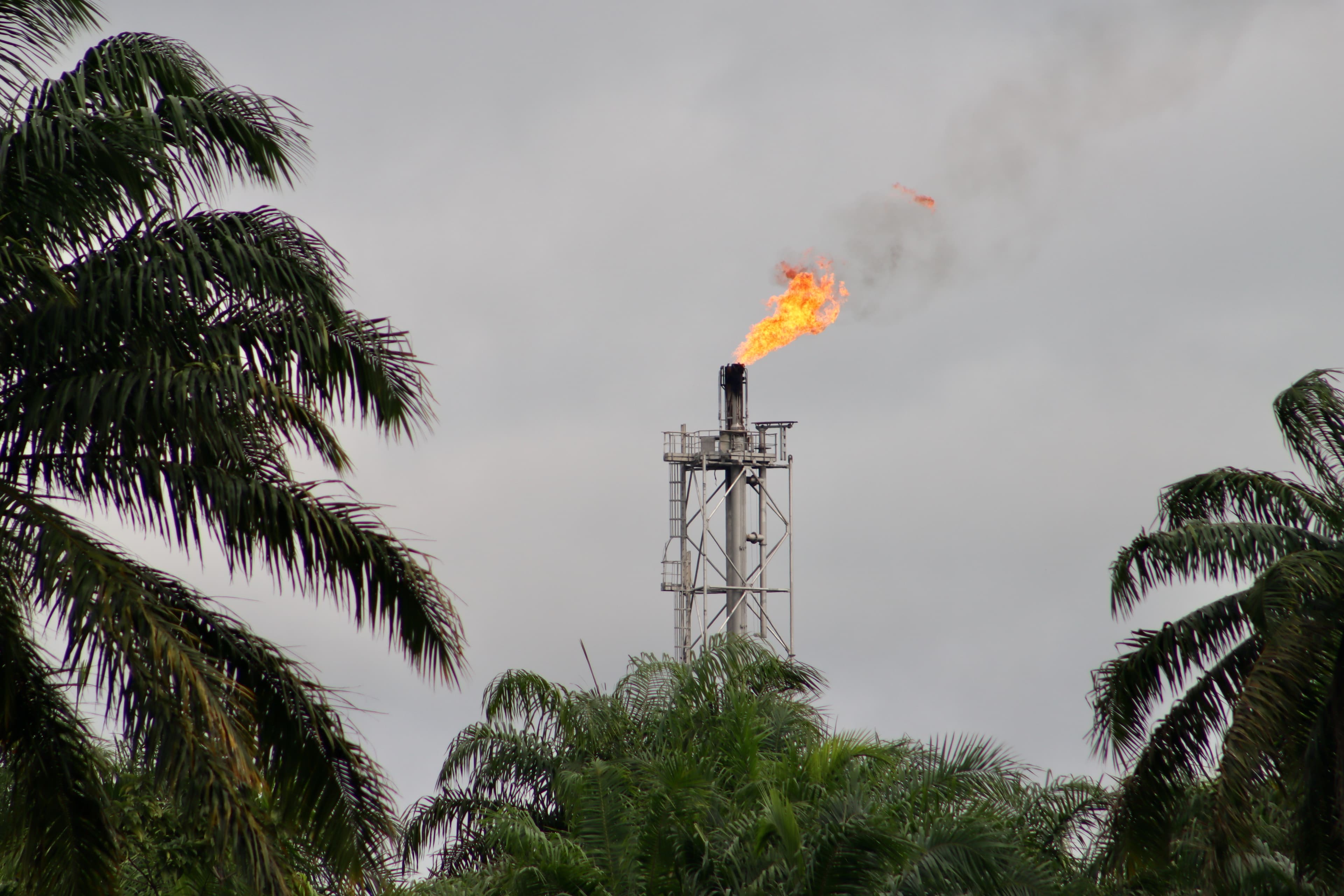
“The fire is just burning from morning to night, from day to day,” says Wisdom Ajie, who lives in Ogbogu. Total has been flaring there since before he was born 43 years ago, he says.
Local residents protested against Total this year and in 2025, citing health effects like eye and respiratory problems from flaring, among other concerns.
Total declined to explain why flaring continues there or why the company considers it non-routine. A spokesperson says overall flaring is decreasing.
Italian oil giant Eni, meanwhile, says it eliminated routine flaring worldwide last year. But that doesn’t include one of its biggest flares, which, satellite data shows, has been burning off the coast of Nigeria at least 97% of the time.
Eni doesn’t count that flaring as part of its Zero Routine Flaring pledge because, under an agreement with Nigeria’s national oil company, Eni doesn’t own the gas, according to spokesperson Domenico Spina.
Eni, however, is “supporting and promoting" a flare reduction project at the site that is expected to be completed this year, with the goal of zero flaring during normal operations, Spina says.
Some oil companies have improved their numbers by selling off high-flaring operations, although the gas incineration continues under new management. Others sidestep large amounts of flaring at assets they partly own but don’t operate. That’s because participants in the Zero Routine Flaring initiative only count sites they run.
A 2024 report by the environmental group Clean Air Task Force found that flaring attributed to 10 of the largest oil companies would more than double if they included assets they partly own.
BP and Eni, for instance, got a big boost in 2022 when they combined their Angola operations into a joint venture called Azule Energy. Even though the oil majors co-own the new entity, BP and Eni no longer count these flares in their routine flaring totals because they no longer operate them. In 2025, the flares torched 561 million cubic meters of gas, according to the World Bank’s satellite data – more than the annual consumption of all homes in Rhode Island.
BP says it has cut overall flaring by 41% since 2021, but it declined to say how much of that improvement came from the maneuver in Angola. A company spokesperson says BP is on pace to achieve zero routine flaring by 2030.
Azule said in a statement that the joint venture holds direct responsibility for its flaring, while BP and Eni provide oversight. Azule, itself, claims to have eliminated routine flaring in 2024, even as satellites detected three of its flares at least 90% of the time that year. The company said it applies the World Bank’s definitions, which are based on “the underlying cause and operational context of the event,” rather than how frequently satellites detect a flare. Azule added that it is committed to reducing flaring across its operations.
Flaring ‘needs to be regulated’
Voluntary pledges can only go so far, according to some former oil-industry officials. Without governments willing to enforce tough limits, companies have little incentive to stop burning gas.
Governments collect revenues from oil production, giving them an incentive to keep the crude flowing. Strict regulatory bans are rare, and companies can often obtain exemptions or pay fines while continuing to burn.
At times, oil producers use the Zero Routine Flaring initiative to shield against more stringent limits, says Matt Sugihara, a former environmental department supervisor for Exxon's Guyana subsidiary.
“It's really a way to get ahead of regulations by setting your own rules,” Sugihara says. “It needs to be regulated.”
When the U.S. Environmental Protection Agency proposed tighter pollution rules for oil and gas producers in 2022, for instance, Hess Corp. argued the language was overly restrictive and urged the agency to instead follow the "commonsense approach" of the World Bank. Chevron, which acquired Hess last year, said in a statement that it takes actions to reduce flaring beyond what is required by regulations.
It's really a way to get ahead of regulations by setting your own rules. It needs to be regulated.
Matt Sugihara, a former environmental department supervisor for Exxon's Guyana subsidiary
After Exxon discovered oil off the coast of Guyana in 2015, the company told regulators it would avoid routine flaring and its drilling permits prohibited it. Yet when production began in 2019, a faulty compression system led the company to burn massive quantities of gas for years. Instead of halting production, Exxon ended up paying the government $12.8 million in fees for excess flaring as it kept pumping oil and eventually replaced the equipment. Between 2019 and 2022, the company said it flared 525 million cubic meters of gas at the site. That has the same climate impact as driving about 140,000 Hummer SUVs for a year.
Local environmental attorneys sued Guyana’s Environmental Protection Agency in 2022, claiming in part that Exxon’s Guyana subsidiary was violating its permit by flaring routinely. Exxon pushed back saying “routine” and “non-routine” are technical terms that don’t always mean the same thing “as the everyday English language words.” It also leaned on the World Bank’s definitions to argue that non-routine flaring “may be continuous and of long duration.” The lawsuit was thrown out in 2023.
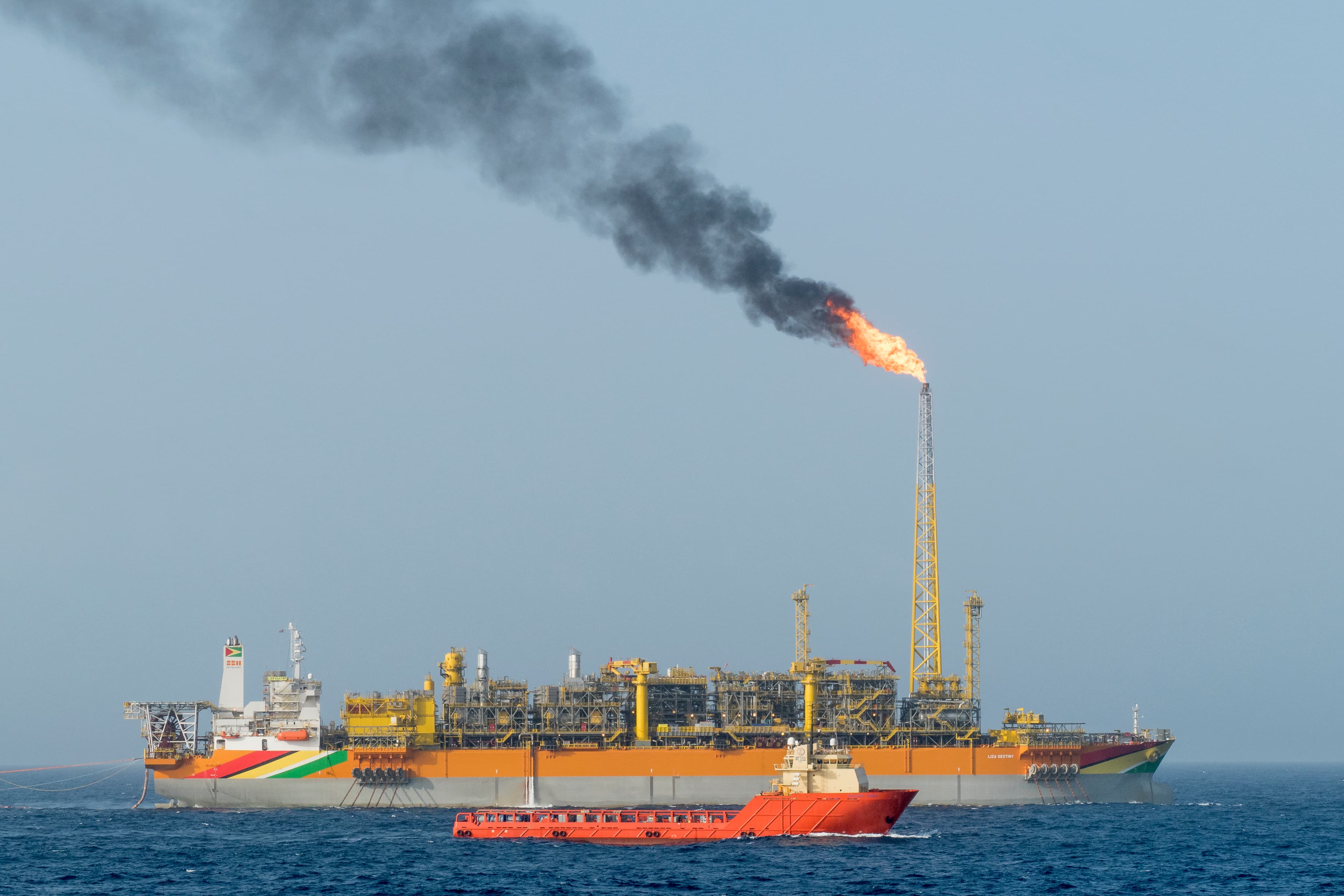
Vincent Adams, Guyana’s EPA director from 2018 to 2020, says Exxon used the word “routine” because it “could mean anything that they want to mean.”
The company later pushed against a proposed policy in Guyana's sustainable development strategy, which called for “no flaring” except for “genuine emergencies.” It urged officials to adopt more permissive language aligned with the voluntary industry initiative. The government’s final version omitted the “no flaring” language.
The revised language made Guyana’s sustainable development strategy “more precise, not more permissive,” says Pradeepa Bholanath, senior director of climate change for Guyana’s Ministry of Natural Resources, who maintains that the country’s flaring regulations are strong.
Exxon officials reject the criticism that they hid behind words like routine. “We can argue as much as we want about what those definitions mean,” says Matt Kolesar, Exxon’s chief environmental scientist. “Our goal is to not flare and not hide behind or circumvent some fuzziness in an interpretation of a definition.”
Kolesar adds that flaring rates in Guyana remain well below the global average; and that Exxon has shrunk its global flaring volumes by more than 70% in the past nine years. “Our industry needs to drive these emissions to as low as we know how to get them,” he says.
The Zero Routine Flaring initiative was never meant to be an alternative to regulation, the World Bank’s Bamji told The Examination and Bloomberg. “We consistently advise governments to strengthen these regulatory frameworks, not soften them,” he added.
In South Ranchito, meanwhile, residents feel helpless in the shadow of the Diamondback flare. Although Texas regulators generally require companies to seek permission to flare gas, they rejected fewer than 1% of such requests over a recent 40-month period, according to an analysis by environmental group Oilfield Witness. At South Ranchito, they’ve approved all 21 of Diamondback’s flaring requests.
With the flare roaring constantly late last year, resident Baudilio Ramirez complained to the Texas Commission on Environmental Quality. Investigators visited the site for 10 minutes on a weekday afternoon in December and asked Diamondback for its daily flaring volumes at the site, according to a copy of the investigation report.
The data should have raised alarms. Diamondback had incinerated more than 124 million cubic feet of gas there in November – double the annual limit on its permit application. Moreover, the flare emitted over 22 tons of volatile organic compounds that month, according to Diamondback’s reply, which blew past the company’s estimates.
Investigators at TCEQ confirmed that the company was flaring “nonstop,” records show, but decided the flare was operating “within the permitted limits” and closed the case.
In its written statement, Diamondback said the flaring was caused by the unplanned outage at the gas company, and that it notified the proper authorities and complied with TCEQ requirements.
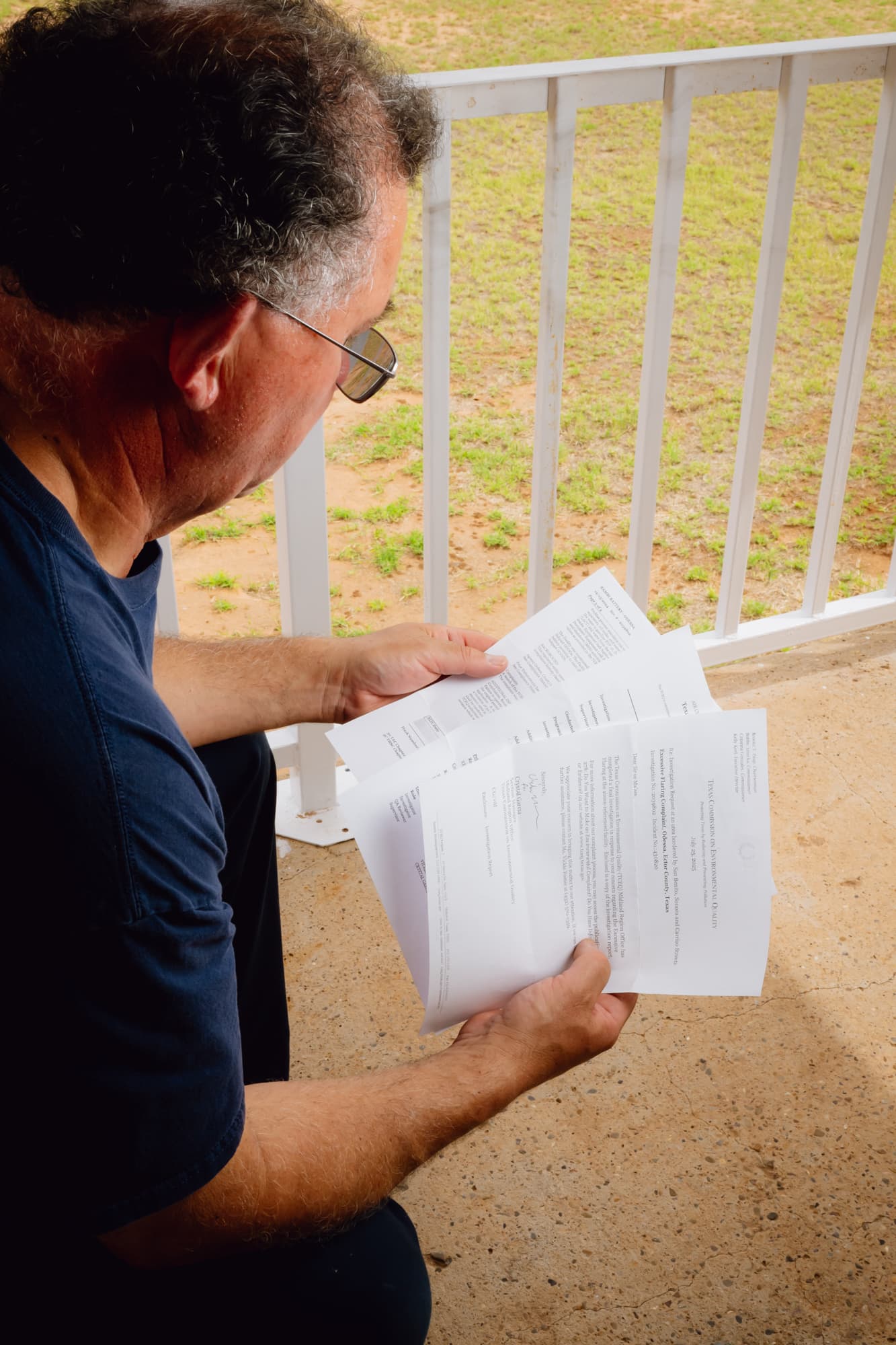
TCEQ officials didn’t respond to numerous calls, emails and detailed questions. In response to a previous complaint from Ramirez, TCEQ found Diamondback had exceeded the oil and gas production amounts in its permit, and resolved the violation by letting the company change its permit. For two other neighborhood complaints, TCEQ investigators didn't find violations when they visited the site.
“All this is about big money,” Ramirez says. “They’re not going to shut it down. We’re just nobodies.”
Some residents, like Norma Lopez Cadena, want to leave. But they feel trapped.
“We can't sell our home,” Lopez Cadena says. “Who is going to want to buy it?”
She wants oil executives to put themselves in her shoes – and do more to live up to their promises to curb flaring. “They have their mansions far from this crap; their families aren’t in danger,” she says. “We all need oil, but come on, have some common sense. There’s people that live next door.”
Léopold Salzenstein and Fernanda Aguirre Ruíz, data reporters at The Examination, contributed to the story.
With assistance from Kyle Kim, Bloomberg.
About the data
To calculate the burning frequency of specific flares in this story, we used 2025 and 2026 observation data obtained from the Earth Observation Group at the Payne Institute for Public Policy at the Colorado School of Mines. We divided the number of times a flare was detected during clear observations by the number of times satellites obtained a clear view.
To calculate the number of flares frequently spotted burning, we used the public, annual gas flared volumes data published by the Colorado School of Mines for 2024, the most recent year available.
After consulting with independent researchers who have worked with the satellite data, we conservatively excluded all the flares with fewer than 50 clear observations from our analysis, to make sure the numbers were representative of the flare’s behavior throughout the year. We then identified all the flares that appeared lit in more than half of the clear satellite images.
The World Bank attributes an operator to the flares located at oil and gas wells, production sites and liquefied natural gas (LNG) plants. We used this data to attribute an operator to our list of flares burning more than half of the time, and compared it with the names of oil companies having endorsed the Zero Routine Flaring (ZRF) initiative. For every specific flare mentioned in the article, we checked with the companies involved and consulted updated daily flaring data.
Data Desk provided daily flaring data and guidance for fact-checking purposes.