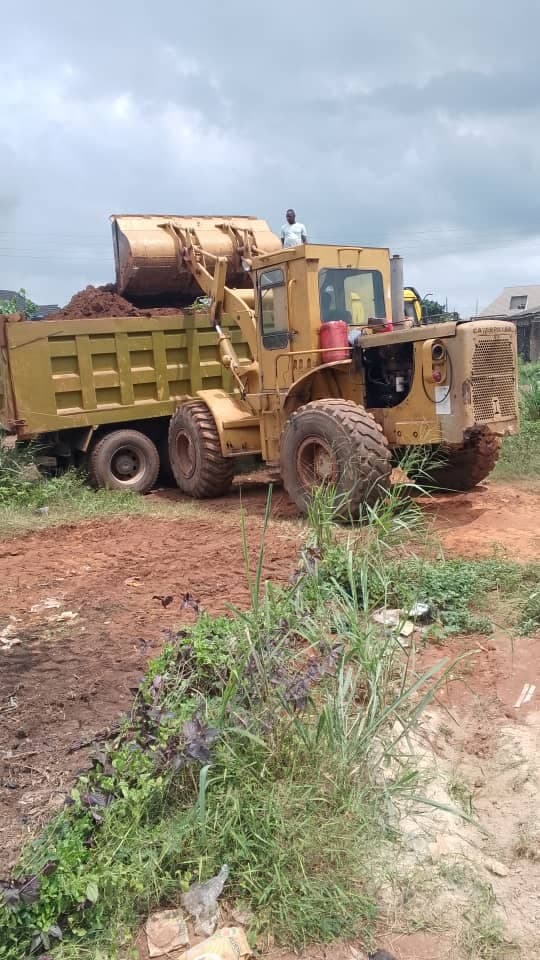
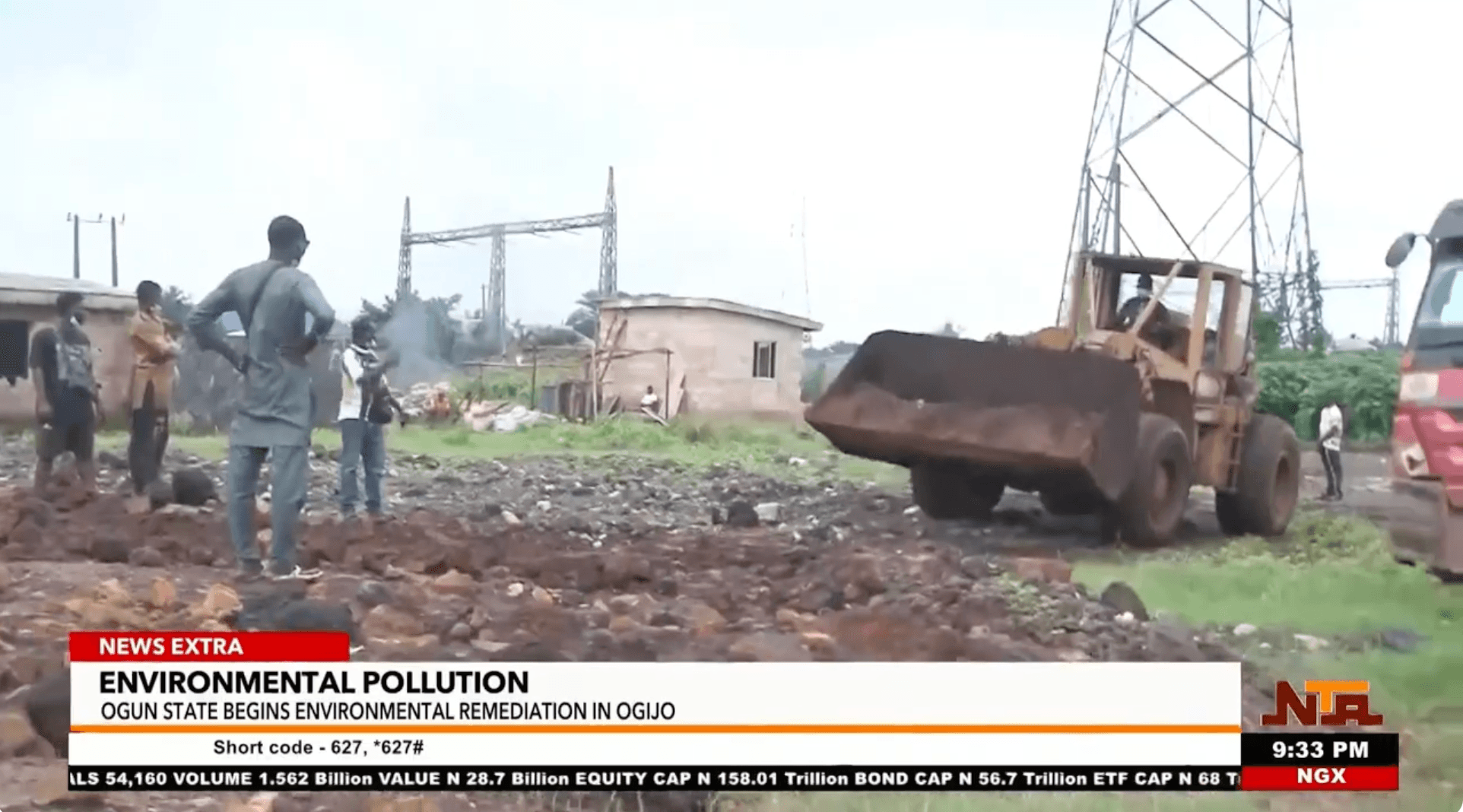
Last month, red, white and yellow trucks hauled away contaminated dirt in the industrial town of Ogijo, Nigeria, where factories that had supplied the American auto industry with lead for car batteries had poisoned families and workers.
The cleanup, funded with $150,000 from the battery recycling plants, was the most visible sign of progress for people who have long lived under a smoky sky and dealt with unexplained health problems.
But the community remains largely in the dark. The state government has not released reports on soil contamination or blood testing. Residents said that government-appointed, community pollution monitoring committees had not met. And no one really knows how much of the contamination remains.
Subscribe to our newsletter
Global health reporting, straight to your inbox
The Examination, The New York Times and the Premium Times revealed in an investigation last year that 70% of people who volunteered to have their blood tested had lead poisoning, which can cause lifelong brain damage. At markets, a schoolyard and elsewhere, soil tests identified lead levels that necessitated immediate cleanup, according to scientists hired by the news outlets.
Those researchers concluded that the contamination came from factories that melted down lead from discarded car batteries. Smoke billowed from the factories’ furnaces, sending tiny particles of lead skyward before they settled in yards and homes. The lead blocks created by the recycling process were sold to companies in the United States and elsewhere that make batteries for Ford, Tesla and others.
State officials acted quickly, closing several factories in and around Ogijo in November. They also suspended three environmental auditing firms, accusing them of failing to accurately report which safety equipment had been installed by the recyclers.
“This case attracted special attention because of the human beings and the lives that were involved,” said Ola Oresanya, Ogun State commissioner for the environment. “We’re trying to correct the wrongs of the past.”
Factories began to reopen in February after the companies agreed to install equipment to reduce pollution and capture lead particles, according to correspondence between companies and regulators reviewed by The Examination. Some factories are exporting again, though not to the United States, according to trade records.
Residents still don’t know the extent of the damage. The state health authority took blood samples from nearly 500 people in February to validate testing conducted by The Examination and its partners, but the government has not released the results. The Examination has requested a copy of the report 10 times.
Thomas Ede and his three children volunteered for the news outlets’ testing last year. It showed that Ede’s teenage son Freeman had a blood-lead level almost six times higher than the level at which the World Health Organization recommends immediate action to reduce exposure. Freeman has complained of stomach pains and other conditions associated with lead poisoning.
The family was tested again by the government. Ede said officials told him to expect results within months, but he has yet to be contacted. “I expected someone to ask, ‘How is your child? What can we do to help?’ But nobody has done that.”
Recycling lead for U.S. car batteries is poisoning people
The state government also hired researchers to study where the lead was coming from. In December and January, they collected almost 200 samples of soil, water and air in and around recycling plants — more samples, over a larger area, than the testing commissioned by The Examination and its partners.
The follow-up testing yielded similar results. In a report that has not been released to the public, researchers wrote that there was “clear and compelling evidence” of lead contamination — up to seven times the level generally considered to be hazardous. In some cases, soil near homes was more contaminated than that within factory walls.
Those lead levels, researchers wrote, posed “serious and ongoing risks to human health, particularly to vulnerable populations such as children.”
Companies fined for pollution, other violations
The state government fined seven factories $10,000 each for the contamination and other violations of Nigerian law. Four companies have paid the fine; three are contesting it, officials told The Examination. The four companies that paid — Metal Manufacturing, True Metals, Vedanta Metals (formerly Everest Metal Nigeria) and African Nonferrous Industries Ltd. — were also ordered to pay a total of about $150,000, according to government records reviewed by The Examination.
Oresanya told The Examination that those amounts were “relatively high” for the state, an industrial hub close to Lagos, the country’s largest city and port.
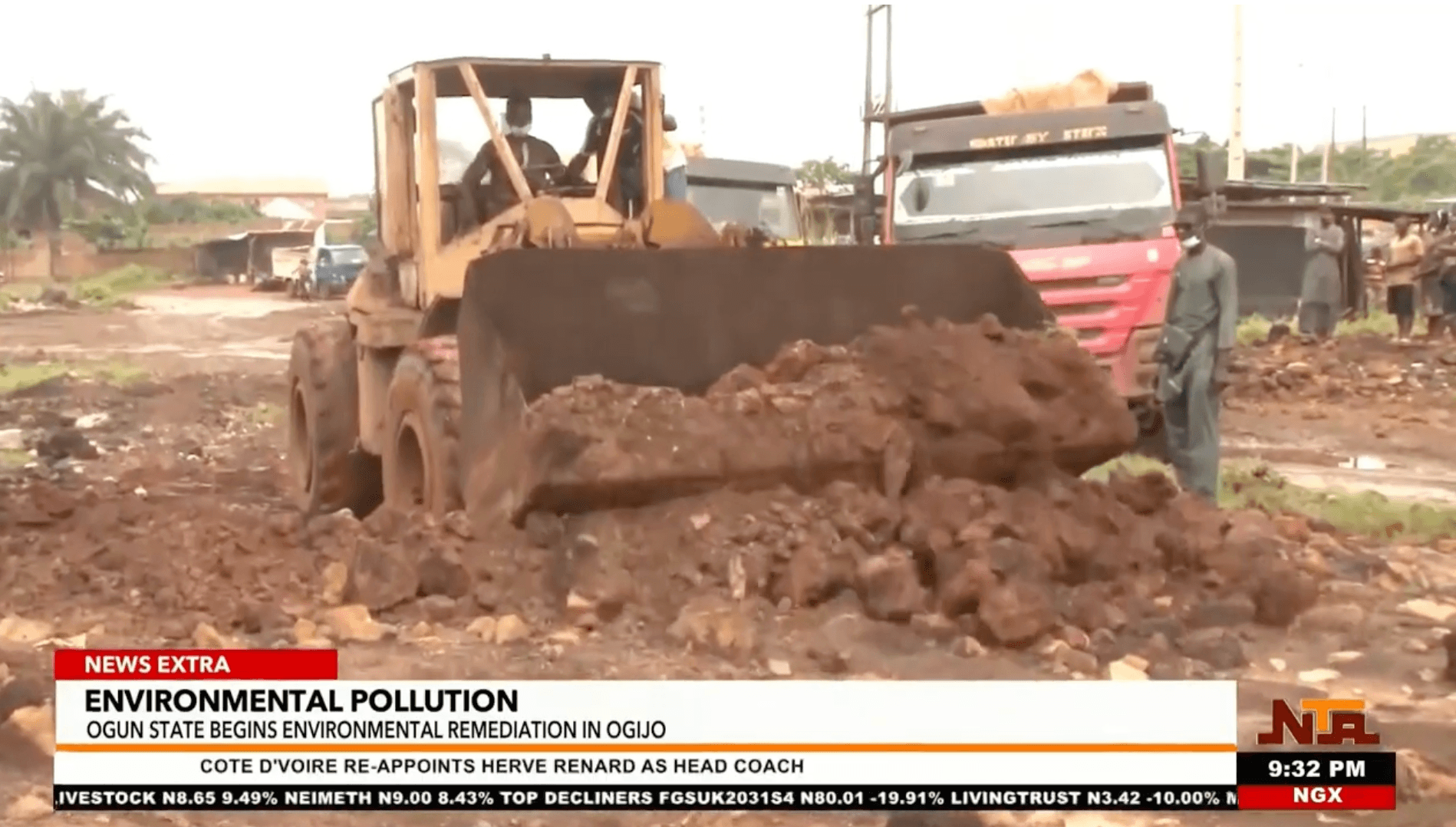
More than half of that was to be spent removing contaminated dirt and lead waste, known as slag, in and around Ogijo. The rest was to be used in part to dig wells to replace those contaminated by the factories and to plant trees that absorb lead from the ground. That work has not yet begun, officials told The Examination.
It’s not clear what more needs to be done to make the neighborhood safe. Cleaning up a neighborhood contaminated with lead can take years to complete and cost millions of dollars, depending on how large it is and how deeply the lead has penetrated into the soil, experts have told The Examination. The government report on soil testing doesn’t say how large an area has been contaminated.
Factories allowed to reopen after agreeing to fix problems
The conditions under which the factories reopened varied, depending on the violations identified by government inspectors who visited the plants after The Examination and its partners published their investigation. Those violations included not conducting blood tests for workers, discharging untreated wastewater and having workers shovel lead dust instead of using automated equipment.
Executives at African Nonferrous Industries were told they could reopen if they committed to making 19 improvements by last May, according to a letter from the Ogun State Environment Protection Agency.
They included enclosing furnaces to prevent smoke and lead particles from escaping and installing a machine to break old batteries apart without spilling lead and acid. The company was also required to set up a medical clinic and hire a nurse, according to the letter.
R. Chethan Kumar, a representative of African Nonferrous Industries, told The Examination in May that the company was working closely with authorities and that it “has always been open to continuous improvements and value additions.” He did not answer questions about what improvements had been made.
Government officials didn’t answer The Examination’s questions about whether the factories have installed the required equipment, saying only that they monitor air pollution through devices installed in battery recycling factories and other facilities. The companies did not respond to questions sent by The Examination.
True Metals, one of the larger battery recyclers in Ogijo, is also running again, according to an employee who asked not to be identified because they are not allowed to speak to the media. The employee said furnaces now release less smoke inside the smelter than before.
No such cleanup at abandoned factory in Republic of Congo
While the cleanup is underway in Nigeria, sites in other countries that have supplied the United States with recycled lead remain severely polluted. The industry has flourished in Africa after the U.S. and other countries cracked down on dirty recyclers.
In the Republic of Congo, a factory that shipped recycled lead to the U.S. throughout 2023 was closed after an investigation by The Examination revealed lead poisoning in children as young as 15 months old.
This year, residents collected soil samples near the abandoned factory and homes and sent them to Columbia University in New York. Scientists found dangerous levels of lead: One sample contained almost 50 times more lead than the level at which the U.S. Environmental Protection Agency recommends cleanup.
Neither the Congolese government nor the company, Metssa Congo, has removed the soil or offered medical care to those poisoned. The company did not respond to questions about the contamination.
Alexander van Geen, the Columbia University professor who coordinated the soil analysis, told The Examination that although the contamination is severe, it isn’t widespread. It wouldn’t take much money to clean up the residential area outside the factory, he said.
And if that happened, he said, “it would be a step towards cleaning up the myriad other sites in need of attention.”
Tunde Eludini contributed reporting from Ogijo, Nigeria.