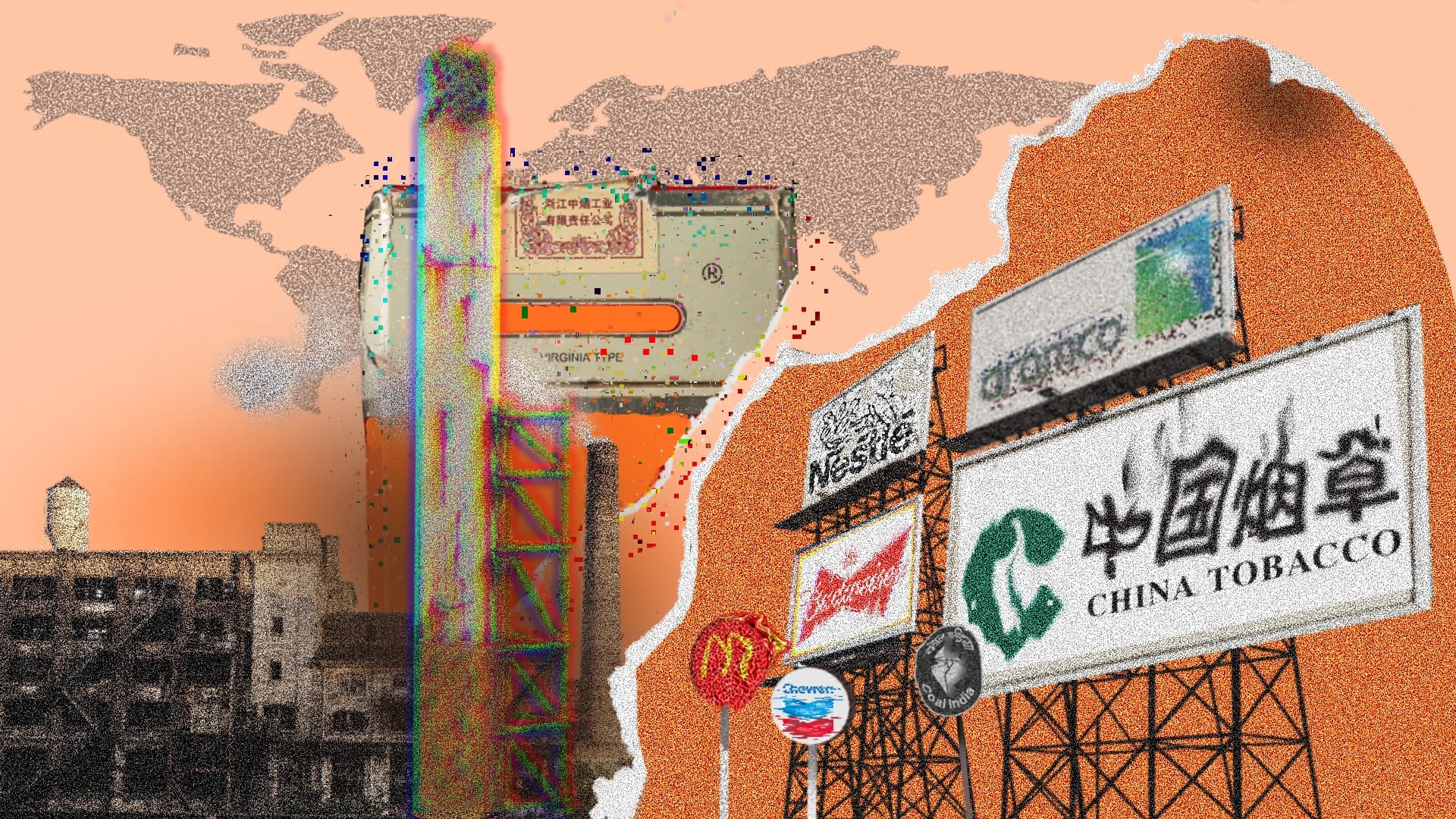
There’s what we fear may kill us, and what most likely will.
Falling bombs, mass shootings, natural disasters and other means of sudden, violent death dominate headlines. But they’re far from the leading causes of death worldwide.
Most global deaths are now caused by noncommunicable diseases like cancer, heart disease and diabetes. In many cases, these diseases are caused by industrial pollution or well-known consumer goods.
In a landmark study published in The Lancet in 2023, researchers identified four key industries responsible for many of those diseases: tobacco, alcohol, ultraprocessed foods and fossil fuels. Together, they account for at least a third of deaths globally.
But what is the scale of death associated with individual companies in these industries? That’s something researchers haven’t measured. Without quantifying the role of particular companies, it’s difficult to hold them accountable and find solutions.
“Showing that a specific company is the vector for an enormous amount of death and suffering can lead to regulations that restrict or eliminate harmful industry practices or legal action to hold the industry accountable,” said Lisa Bero, a professor at the Center for Bioethics and Humanities at the University of Colorado Anschutz.
Using global mortality, disease and business data, The Examination has identified the company that reasonably can be held responsible for the most worldwide deaths over the past three decades. That company is China National Tobacco Corp., better known as China Tobacco.
Little-known outside China, this is a company we’ve been following for several years. In 2023, The Examination and its partners revealed that the state-owned company has undercut tobacco control efforts for decades, resulting in a smoking epidemic with dire consequences.
Like other tobacco companies, China Tobacco has a history of deflecting, denying and minimizing the deadly consequences of its cigarettes. Pioneered by Western tobacco giants, the strategy of sowing doubt about the harms of their products has been adopted by the fossil fuel, ultraprocessed food and alcohol industries.
The value of determining the number of deaths caused by a company is that it “shifts the responsibility for chronic disease to corporations” that make harmful products, and away from the people who use them, said Bero, who is also a member of The Examination’s scientific advisory committee.
Modeling death
To understand why the case for China Tobacco is so strong, first we must size up the challenge. Why is it so hard to assign mortality figures to individual companies?
The most comprehensive source of information about how people die is the Global Burden of Disease study, run by the Institute for Health Metrics and Evaluation at the University of Washington in Seattle and funded by the Gates Foundation.
This huge project involves thousands of researchers and relies on disparate sources of information collected from all corners of the globe.
This isn’t just about gathering death records, which in many countries aren’t universally issued or may not accurately state a cause of death. Even if they do, they don’t normally detail whether a particular case of heart disease or cancer was linked to smoking, drinking or pollution.
Instead, the Global Burden of Disease uses a “big data” approach to make broad estimates. It pulls information from thousands of sources, including medical studies, government reports and news stories — sources as diverse as the Zimbabwean census and a study on diabetic ulcers in Afghanistan.
The result: The study has estimates for hundreds of different health outcomes in 204 countries and territories, some going back more than 30 years.
The Global Burden of Disease models how many people died globally of appendicitis in 2023 (between 21,000 and 43,000), for example, and how many Russians died of leukemia in 1993 (between 7,200 and 9,000).
Subscribe to our newsletter
Global health reporting, straight to your inbox
Importantly, it also assesses risk factors. High alcohol use, for example, leads to deaths by drowning (between 4,800 and 8,400 in 2023) and from liver scarring known as cirrhosis (between 259,000 and 358,000 the same year). The link between risk factor and outcome makes it possible to connect industries to deaths.
This study provides a range of estimates for each outcome, from the lowest plausible estimate to the highest plausible estimate. (Researchers call this the 95% confidence interval.) When the high and low estimates are far apart, there is often a lack of scientific certainty.
But the Global Burden of Disease isn’t perfect. It’s been criticized for providing estimates in areas where some contend the data is too limited to reach a conclusion, as is often the case in low- and middle-income countries.
For example, some who study tobacco in China say the Global Burden of Disease overestimates smoking deaths in that country, in part by not accounting for how much air pollution and occupational risks (like coal dust) contribute to deaths among smokers. Other studies show the Global Burden of Disease may underestimate deaths linked to burning fossil fuels.
But it is among the most widely used data sources in public health, and it is regularly cited by the World Health Organization, the World Bank and the U.S. Centers for Disease Control and Prevention.
“The Global Burden of Disease is the most accurate data we have,” said Jappe Eckhardt, a professor of international political economy at the University of York and a co-author of a recent WHO report on health-harming industries in Europe. “Most researchers would accept that.”
An industrial body count
Drawing on the same methodology as the 2023 Lancet study about the industries that are tied to the most deaths, The Examination used the latest Global Burden of Disease dataset to calculate the number of deaths since 1990 associated with each health-harming business sector.
A few things stand out. Tobacco is almost certainly the deadliest industry, as its low estimate is greater than the high estimate for any other category. Companies that cause air pollution are likely second. The ultraprocessed food figures carry enormous uncertainty — note the huge variance in the high and low estimates.
The next step is to determine how many of the deaths can be assigned to individual companies in these industries. This is “infamously difficult,” said Adam Bertscher, a teaching fellow in global and public health at King’s College London who co-authored the 2023 Lancet study.
One reason is that diseases like cancer take a long time to develop, so a company’s role in producing health-harming products must be tracked over time. The wine someone drank each night for 20 years may have contributed to a cancer diagnosis today; last night’s cocktail would not.
Adding further complexity is the fact that companies are bought and sold, merged and divided, making attribution of past harm more difficult.
But linking China Tobacco to a death figure is far less knotty. Here’s why.
A starting point in attributing deaths to individual companies is to track health-harming companies’ market share, said Stanton Glantz, a retired professor and longtime tobacco researcher at the University of California, San Francisco School of Medicine.
As a state-owned monopoly, China Tobacco controls at least 97% of China’s domestic cigarette market. That doesn’t include the small number of foreign cigarettes sold in the country, but the company makes many of those as well under licensing deals.
Moreover, China Tobacco has dominated the market for decades. China’s cigarette industry, once ruled by foreign companies, was nationalized in the 1950s. By the early 1980s, the industry was a sprawling hodgepodge of small, inefficient, state-owned factories. China Tobacco was created in 1982 to consolidate and modernize the government’s tobacco interests.
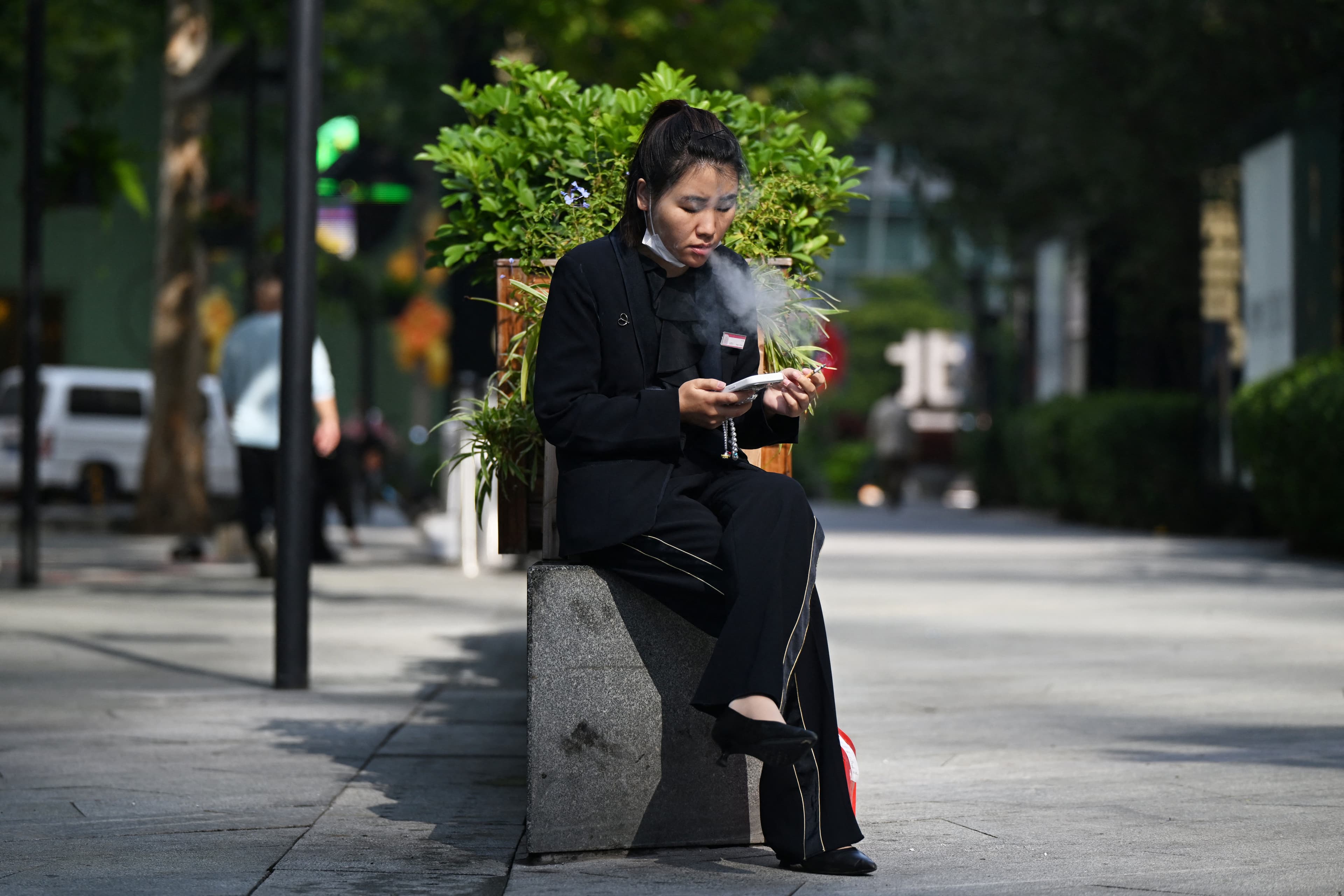
Today it is a many-tentacled behemoth, with subsidiaries that handle much of the production process, from drying tobacco leaves to rolling cigarettes and printing boxes. The company effectively serves as its own regulator, called the State Tobacco Monopoly Administration, helping to police the black market, licensing tobacco trucks and setting the country’s tobacco import and export rules.
The market it dominates is huge. China consumes almost half the world’s cigarettes, according to the market research company Euromonitor International. As such, China Tobacco produces more cigarettes than Marlboro-maker Philip Morris International and the next 21 largest tobacco companies combined.
Since China Tobacco and its predecessors have had a near-monopoly on China’s cigarette market for decades, those companies also have had a near-monopoly on the country’s tobacco-related deaths.
The numbers, which come from the latest Global Burden of Disease, are striking: Including those felled by secondhand smoke, tobacco likely killed between 59.1 million and 77.7 million people in China from 1990 to 2023.
Based on the study’s estimates, an average of 2 million people in China died in each of those years from tobacco.
59.1M to 77.7M
People in China likely died from tobacco from 1990 to 2023
2M
People in China likely died from tobacco each year, on average
Source: Global Burden of Disease, 2023
The Examination sent requests for comment to officials at China Tobacco’s headquarters, its Hong Kong subsidiary, the ministry that oversees the company and China’s Foreign Ministry, which often handles inquiries from foreign media. No one responded.
Big Oil, Budweiser, Big Macs: Can any other company come close?
Does any other single company approach this level of lethality? To evaluate, The Examination used the lowest plausible estimate of tobacco deaths in China from 1990 to 2023 and multiplied that by China Tobacco’s 97% market share. The result: 57.3 million deaths.
We compared that to the highest plausible estimates for deaths caused by other industries.
In the alcohol industry, there is no plausible competitor. The Global Burden of Disease’s high estimate for global deaths related to alcohol since 1990 is about 56 million, slightly below the low estimate of deaths attributed to China Tobacco. But the alcohol market is split among beer, wine and spirits makers. Even the largest brewer, Budweiser-maker Anheuser-Busch InBev, holds less than a third of the global beer market.
Next up: the ultraprocessed food industry. Ultraprocessed foods are usually defined as those that contain ingredients you wouldn’t find in your kitchen, like partially hydrogenated vegetable oil and high-fructose corn syrup. They are often fried, extruded and altered in ways that remove whole grains. Chicken nuggets, energy drinks and meat sticks are all examples.
The Global Burden of Disease doesn’t directly count deaths related to ultraprocessed foods. But the WHO and researchers who published the 2023 Lancet study used four categories of foods — high-sodium, high trans fat, processed meats and sugary beverages — as a proxy for that industry.
Using the same approach, we arrived at a high estimate for global deaths linked to ultraprocessed foods between 1990 and 2023: 165 million. Most of those deaths are attributed to high-sodium products.
For any one food company to rival China Tobacco, it would have to control roughly a third of the global ultraprocessed food market — and sell lots of high-sodium products.
The global ultraprocessed food industry, made up of hundreds of companies, was worth an estimated $1.9 trillion in 2023, according to data from a 2025 study published in The Lancet.
Nestlé, the largest manufactured food company, had about $110 billion in revenues in 2023, about 6% of the global ultraprocessed food market. McDonald's, the largest fast-food company, had global sales of $130 billion — about 7% of the ultraprocessed food market.
Using their overall sales figures as a stand-in for ultraprocessed food output is admittedly an inexact method. It likely over-represents these companies’ contributions to chronic diseases because some of their products are not ultraprocessed; one study said 9% of McDonald’s menu items aren’t ultraprocessed.
But even if every product that Nestlé and McDonald’s sold were highly processed and filled with salt, the number of deaths tied to each company, based on market share, would be roughly one-fifth as high as China Tobacco’s lowest plausible estimate.
The Examination asked Nestlé and McDonald’s if they could provide the amount of health-harming ingredients sold to consumers or if they had calculated the number of global deaths attributable to their products. Neither company responded to our emails.
The final contenders for the title of world’s deadliest company are those that may present the greatest risk to the broadest swath of the globe.
According to the WHO, 99% of the world’s population is threatened by dirty air. The Global Burden of Disease’s high estimate is that 164.2 million people died from air pollution between 1990 and 2023.
The deadliest form of this pollution is in the form of fine particles known as PM2.5, which increase the risk of cancer, heart disease and respiratory ailments like bronchitis. These particulates, a fraction of the diameter of a human hair, account for the vast majority of air pollution deaths, according to the Global Burden of Disease.
The fossil fuel industry, and by extension coal-fired steel mills, power plants and fume-spewing automobiles, is a major culprit. Other sources of air pollution include mines, cement factories and construction sites. Many companies contribute, as do individuals and even natural sources such as wind-blown dust, volcanoes and forest fires.
About 27% of all PM2.5 deaths can be attributed to burning fossil fuels, according to a 2021 study. That would be about 40 million deaths over the 1990-2023 time frame, assuming the highest plausible estimate.
Fossil fuels are also the major source of a second deadly air pollutant: ground-level ozone. The major sources of ozone pollution are nitrogen oxide and volatile organic compounds emitted by the burning of these fuels as well as emissions from products like solvents, paints and coatings. Best known as the major component in smog, the high estimate for ozone deaths during this time period is 18.5 million.
When ozone deaths are combined with the 40 million PM2.5 deaths from fossil fuels, the total is about 58.5 million over the 34-year period.
That figure, based on the high estimate for air pollution deaths, is close to the 57.3 million deaths attributable to China Tobacco during the same years, based on the lowest plausible estimate.
58.5M
Deaths estimated from fossil fuel companies between 1990 and 2023, for all companies
57.3M
Deaths estimated from tobacco in that period from China Tobacco alone
But dozens of fossil fuel companies, including giants such as Saudi Aramco, Coal India and Chevron, have contributed to that total. None has anything close to China Tobacco’s market share. (Saudi Aramco, Coal India and Chevron did not reply to requests for comment.)
We considered other industries linked to large numbers of preventable deaths. Arms manufacturers are often scrutinized, and wars in Ukraine, the Middle East, Sudan and elsewhere have produced enormous suffering. Purdue Pharma and other drugmakers have profited from a tragic opioid crisis they helped foment. And deaths from traffic wrecks are a daily occurrence.
Around the world, about 240,000 people died in armed conflicts in the year ending June 30, 2025, according to the International Institute for Strategic Studies. About a half-million died from drug use and another 1.3 million from road injuries in 2023, according to the Global Burden of Disease.
Deaths associated with China Tobacco outpace all of them.
Watch: The World's Deadliest Company
A look at how tobacco shapes Chinese state economics, and its devastating effects on public health. This video was produced by the YouTube channel fern, based on original reporting by The Examination.
China’s dependence on tobacco revenue
For the moment, no other company comes close to the toll of China Tobacco. Might that change in the future? Diseases linked to obesity are growing rapidly in many parts of the world, and global fossil fuel emissions hit a record high in 2025.
Still, China Tobacco remains formidable, with billions of dollars in profits tied to those millions of deaths. Its profits and taxes paid to the country’s treasury were $226 billion in 2025, a record for the company.
That’s more than the combined pretax income of the world’s No. 1 fossil fuel company (Saudi Aramco, $187 billion), the top food company (Nestlé, $13.5 billion), and the biggest alcohol company (Chinese distiller Kweichow Moutai, $16.4 billion).
The $226 billion was 7.3% of all revenues taken in by China’s central government.
7.3%
Of China’s government revenue came from China Tobacco in 2025
With that revenue comes broad influence over tobacco and health policies in the country. China Tobacco has defeated initiatives to ban smoking in public, stymied efforts to raise tobacco taxes and trumpeted discredited health claims about “low-tar” cigarettes. It even changed the official Chinese translation of a United Nations anti-tobacco treaty to weaken it. As a result, smoking rates in China have remained stubbornly high over the past 25 years.
In a way, the fact that the deadliest company in the world is owned by the Chinese government has an upside. Reining in a Western multinational corporation could require changing policies in dozens of countries — and overcoming resistance from wealthy shareholders and an army of well-connected lobbyists. Given how centralized China’s governance has become, a relatively small number of policymakers could initiate changes to avert millions of early deaths in the next few decades.
Yet China’s weakening economy means President Xi Jinping and his deputies are unlikely to jeopardize billions in government revenue by enacting major tobacco control measures. As such, China Tobacco is likely to retain its spot as No. 1 in the world for years to come.