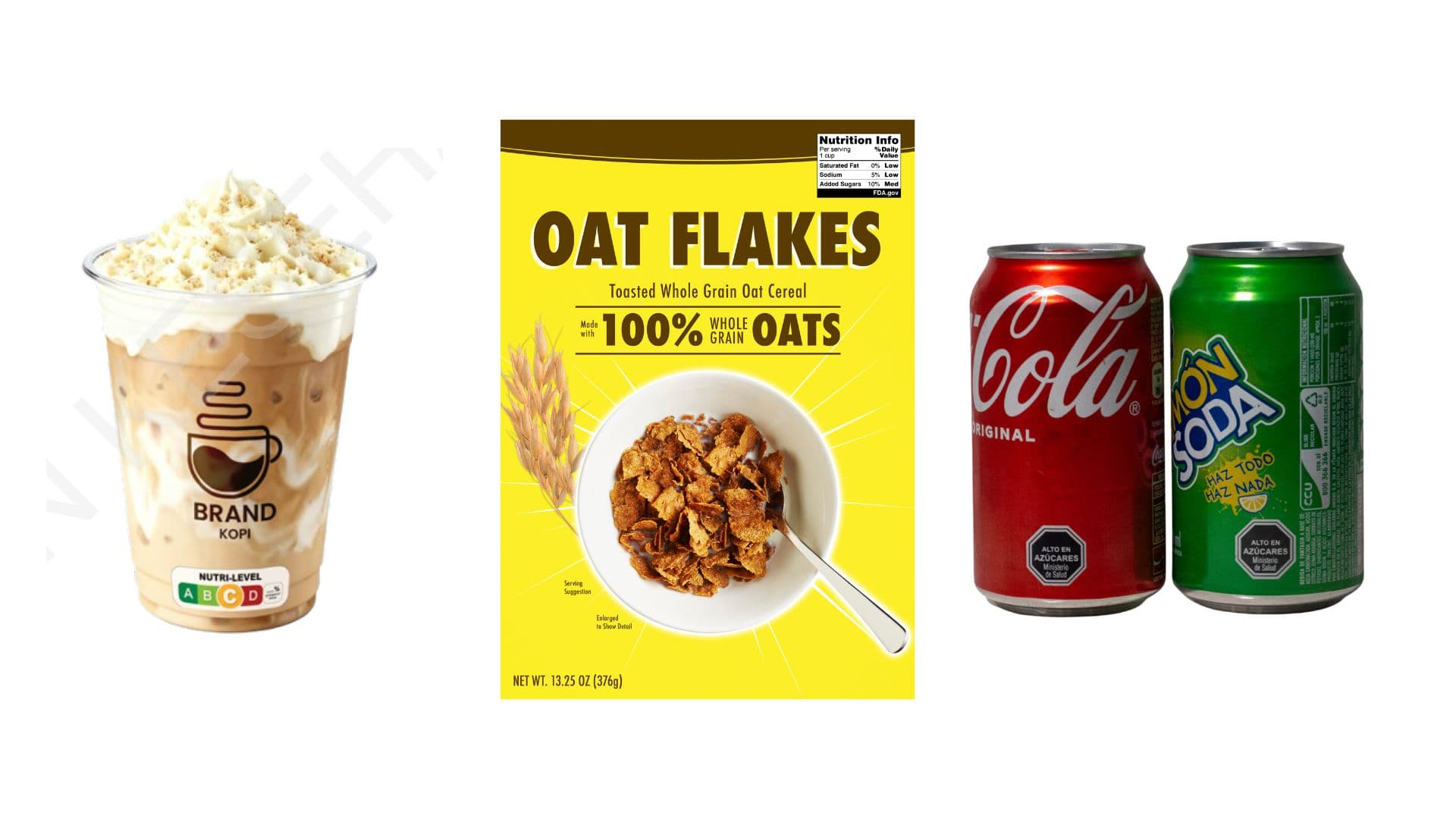
Indonesia has become the latest nation to require food packaging labels that warn consumers when products contain high levels of sugar, sodium or saturated fat.
It joins a growing list of nations implementing a World Health Organization-backed strategy to help people make healthy food choices and combat diet-related chronic diseases. In recent years, Chile put stop sign-style warning labels on food and beverage packages, Indonesia chose a red, yellow and green design with letter grades, and India proposed a star rating system.
The United States could be next.
Last year, the U.S. Food and Drug Administration unveiled a design for a mandatory label on the front of food packages. After receiving thousands of comments from academics and food industry representatives, as well as citizens from Florida to New York to Colorado, the FDA said it’s considering next steps for a final regulation.
But a recent study led by researchers at the University of California, Davis, that compared the U.S. label to a design modeled on the warning used in Chile, among others, raises questions about the FDA’s proposal and whether it will achieve the agency’s goal to “empower consumers to identify how foods can fit into a healthy diet.”
“Front-of-pack labels as a policy are attractive” because they encourage healthier options and incentivize industry to reformulate products, said Brittany Lemmon, the study’s lead author.
But not all warning labels are created equal. Public health experts say that interpretive labels that immediately warn consumers that a product is high in a particular nutrient are more effective than others that simply provide information. In response, the food industry has pushed back against mandatory labels.
Chile’s label: A gold standard
Chile was the first country to require warning labels on food. Public health experts have praised its simple design.

Interviews with parents and children in Chile show that the labels are “just so easy to understand,” Lemmon said. The label “doesn't have grams or milligrams, it doesn't have percent daily value.”
Another key feature is its use of a shape universally understood to tell people to stop, co-author Jennifer Falbe said. If a product is high in all three worrisome nutrients — sugar, sodium and fat — it bears three black octagons.
A decade’s worth of data shows the label is effective. Eighteen months after its implementation in 2016, consumption of sugar-sweetened beverages dropped nearly 25%. Studies have found that Chileans are purchasing fewer products high in saturated fat and sodium.
Mexico, Israel and Uruguay soon followed with similar labels. More than a dozen countries, including Kenya and South Africa, have announced plans to roll out their own.
Subscribe to our newsletter
Global health reporting, straight to your inbox
But the food industry’s lobbying has prolonged the period between proposal and implementation. In South Africa, for example, the health ministry proposed warning labels three years ago but has yet to provide a time frame for putting them in place.
Falbe said that the industry response often varies depending on how politically popular food label regulations are in any country.
“When there's strong political will for a mandatory front-of-package label, you might see industry supporting ... a weaker design,” she said. “In another country, where you may not see as much political will, you may see industry just opposing the policy outright.”
Indonesia label may lead to confusion
The industry has shaped Indonesia’s approach. When the Indonesian government proposed labels in 2024, industry-friendly entities pushed back — including the United States.
A report from the U.S. Department of Agriculture’s foreign affairs office said the Indonesian regulation would have “a significant effect on U.S. packaged food and non-alcoholic beverage exports” to Indonesia, which it valued at $54 million per year. Industry associations asked the Indonesian government to postpone its regulation, citing the financial costs associated with printing and designing the labels.
The pressure worked: Indonesia delayed the labels by two years.
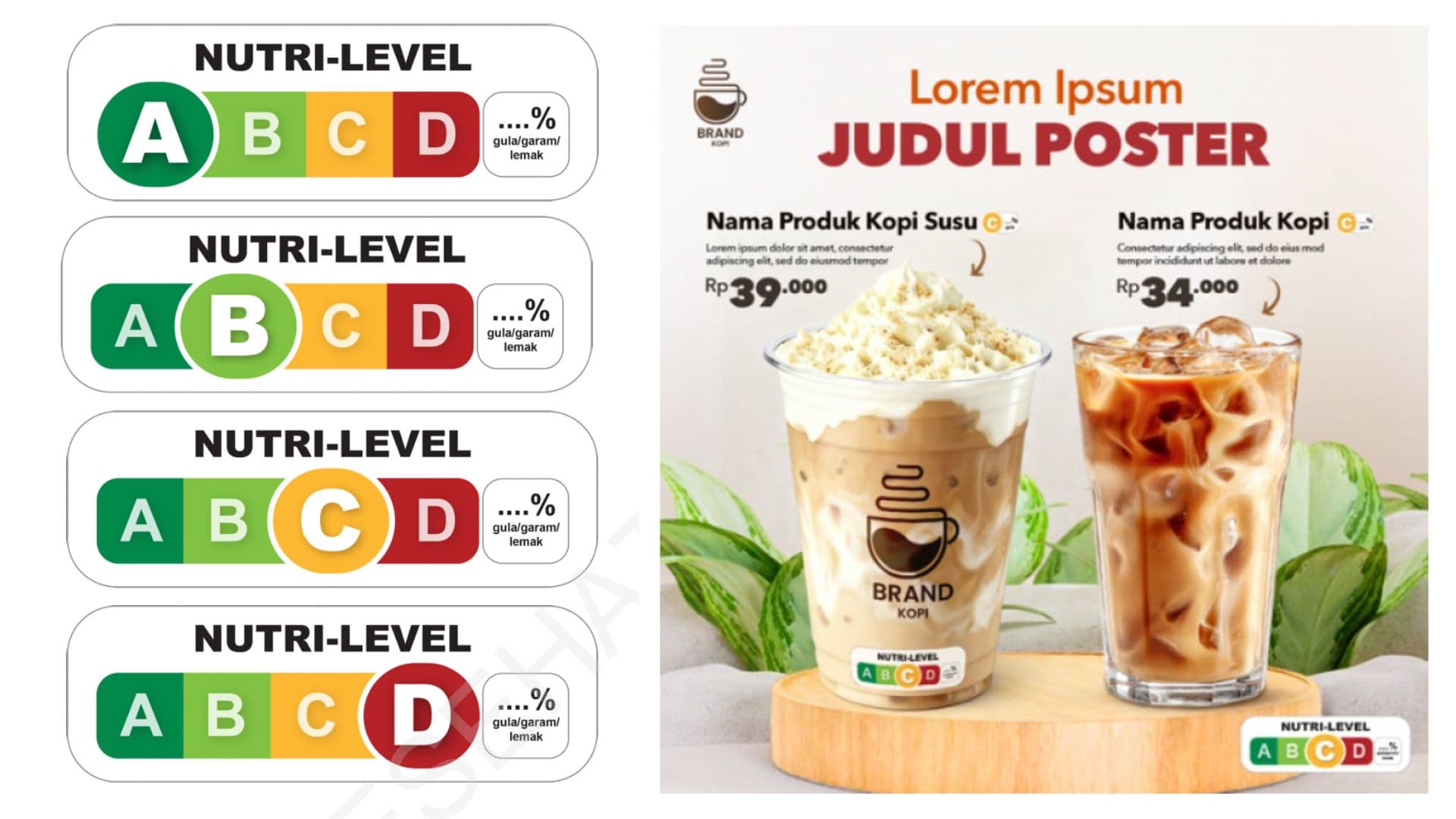
Indonesia’s labels feature red, yellow and green icons and grades from A to D based on their sugar, salt and fat content. The highest-rated foods will have an A surrounded by a dark green circle; the lowest-rated will have a D in a red circle.
Nida Adzilah Auliani, who specializes in food policy for the Center for Indonesia's Strategic Development Initiatives, in Jakarta, believes Indonesia’s labels may be ambiguous.
“The effectiveness of warning labels depends on how clearly consumers can understand and act on the information,” Auliani told The Examination in an email. A graded scale could lead people to believe that a product graded C is “healthy enough,” even when it still contains high levels of sugar, salt or fat.
Those labels will not be slapped on all foods and beverages in the country just yet. According to Siti Nadia Tarmizi, who leads the Ministry of Health's efforts to combat noncommunicable diseases, the first products to get labels will be beverages that significantly contribute to sugar, salt and fat intake. There will be no fine for companies that fail to comply.
India label leads to ‘health halo’
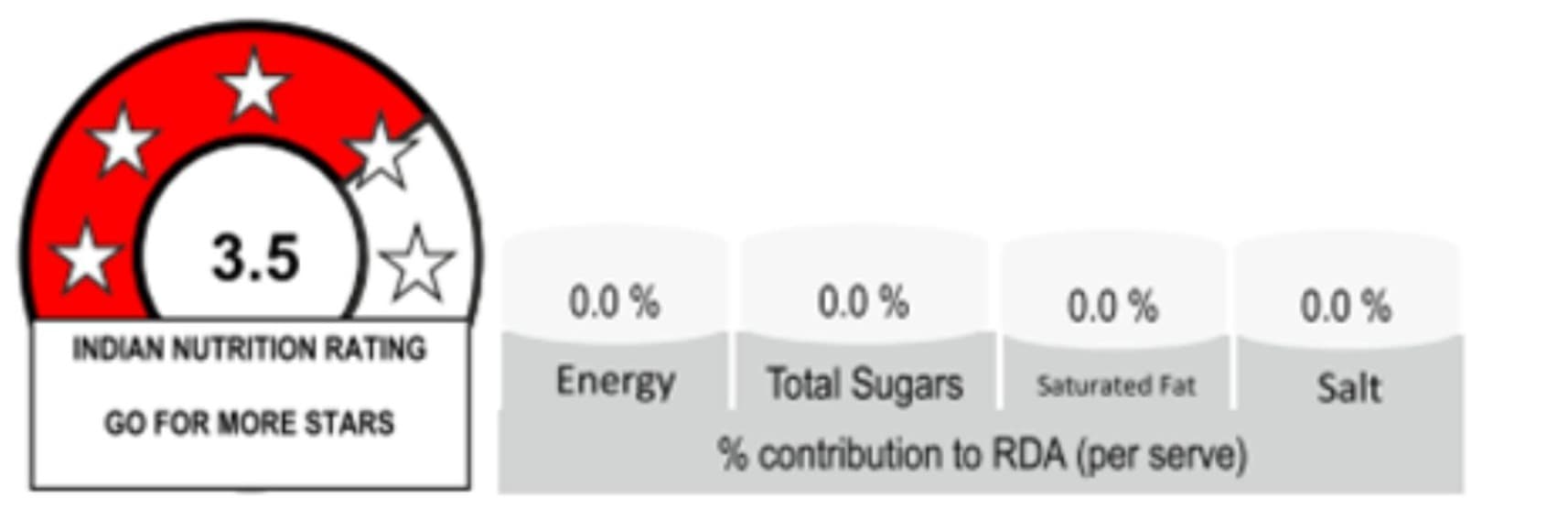
Public health experts in India have had a similar critique of the labeling proposed by that country’s Food Safety and Standards Authority, which initially put forward a star system that would rate products based on overall healthiness. Ratings would range from half a star to five stars, with more stars for healthier products.
In 2024, a public health group filed a petition in India’s Supreme Court against the Food Safety and Standards Authority and called on the agency to use stronger warning labels. India’s top court agreed this year, noting that the agency’s efforts had not “yielded any positive or good result.” The court directed the agency to consider warnings similar to those used in Chile. In response, the agency withdrew its proposed star labels.
Public health experts in India said the star rating system could be misleading. The ratings don’t explicitly warn consumers that a product is unhealthy, said Arun Gupta, a pediatrician and founder of the nonprofit Nutrition Advocacy in Public Interest. That could lead to what he called a “health halo” — the belief that a product is healthier than it is.
The labeling system also would have allowed companies to add nutrients such as fiber or protein to increase a product’s rating. “Adding more isolated protein does not necessarily mitigate any of the negative health effects of having too much sodium or too much added sugars,” Falbe said.
Proposed U.S. label requires ‘algebra’
The proposed U.S. design takes a completely different approach. It features a “% Daily Value” nutrition information box. It states whether the amount of sodium, added sugar or saturated fat in a product is considered high, medium or low compared to the daily amounts recommended for healthy adults.
“Part of the problem,” Falbe said, is that the label is “requiring people to do algebra.”

Lemmon said that the daily value percentages aren’t a well-understood concept, “even by very well-educated people,” and that their use in food labels could distract from the intended message. This is especially problematic given that consumers often decide what to buy in mere minutes.
“In a shopping environment, people are often stressed ... There's a lot of conflicting information,” Falbe said. “We want a label that can cut through all of that stimuli and help people just quickly understand what's in the products.”
While the Chile-style label performed best in Falbe and Lemmon’s study, all the labels they tested outperformed the FDA’s proposed design in terms of how much they helped consumers assess how healthy a product is.
The FDA has said that its label was informed by “a substantial body of research,” including a scientific literature review, consumer focus groups and a peer-reviewed experimental study. In that study, the agency explored nearly 10,000 people’s responses to three different types of labels, including various iterations of the FDA’s proposed design.
However, Falbe said that the agency didn’t examine how its proposed design fared against labels like those in Chile or Indonesia. Nor did it test how its labels fared on products with widely varying amounts of unhealthy ingredients, such as beverages high in added sugar but low in saturated fat. These types of products make up most of the U.S. food supply, Falbe said, and are exactly what consumers should limit.
“We can't necessarily trust that the study's conclusions are accurate,” she said of the FDA’s research.
The FDA, which has listed food labeling among its 2026 priorities, did not respond to a request for comment from The Examination about Falbe and Lemmons’ findings.
The researchers have presented their findings in public comments and at a meeting with the FDA. They said there’s still room for the agency to propose other types of labels. “I don't think that the door is closed at all,” Lemmon said.
Lindsey Smith Taillie, a nutrition epidemiologist at the University of North Carolina’s Gillings School of Global Public Health, said she expects the American food industry to respond to the FDA’s proposed label in a similar fashion as in other countries: Push for voluntary labels or ask the government to adopt less stringent versions.
Those efforts are underway. In comments submitted to the FDA, the Consumer Brands Association has urged the agency to stick with the agency’s existing voluntary labeling scheme, Facts Up Front, which compares the amount of nutrients in a product with how much people are supposed to consume every day — the same approach experts say is confusing to consumers.
The organization told The Examination that studies show consumers appreciate the voluntary labels and use them when buying food and beverages.
“Research has consistently found that Facts Up Front is widely recognized, trusted and effective in helping consumers identify and compare nutrition information” the association said in a statement.
Taillie said the FDA should be cautious about how it weighs industry feedback. “Their interest is a financial interest,” she said, “which is in direct conflict to the health interests of the population.”