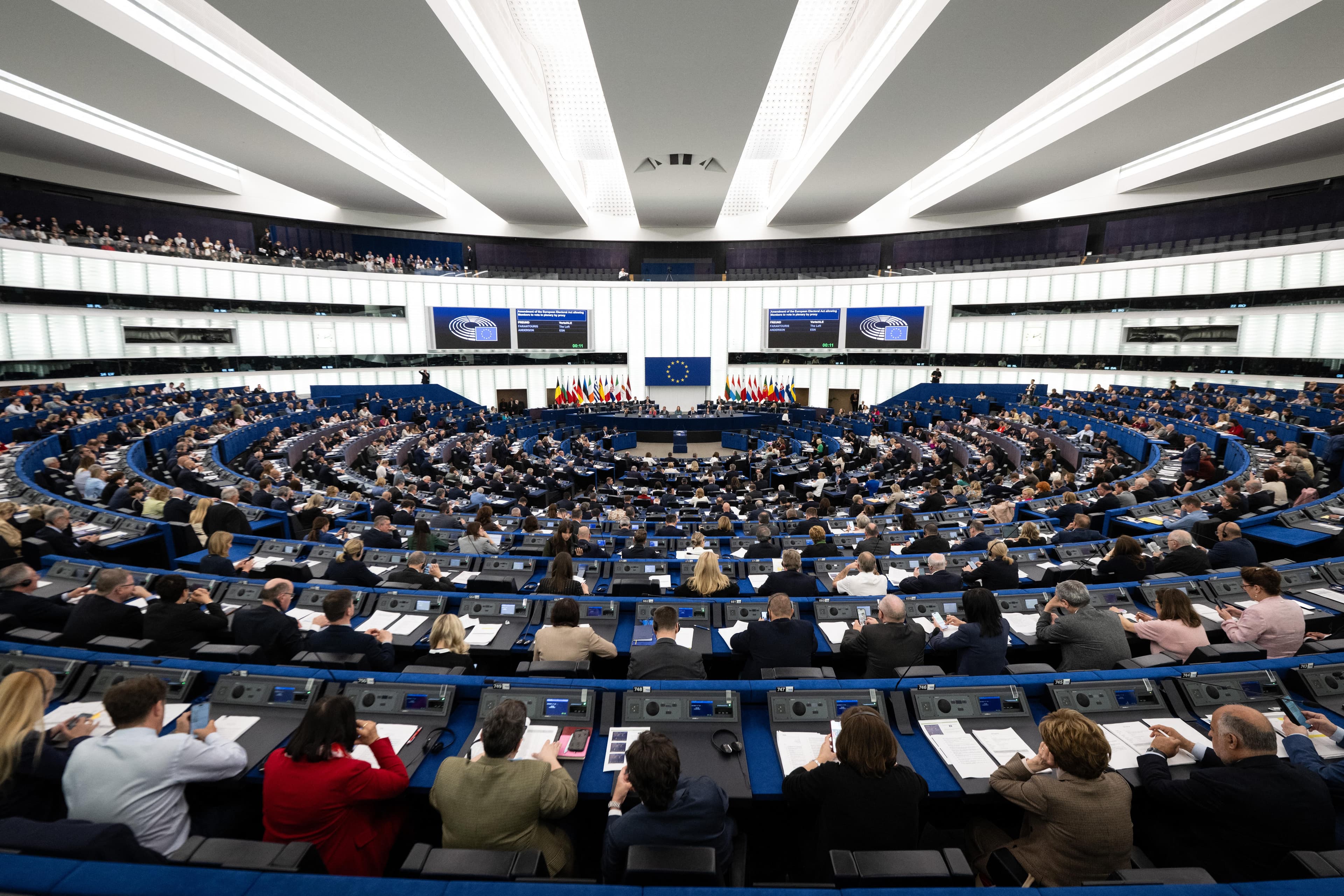
The European Parliament has called on the EU Commission to “urgently investigate” undisclosed meetings between its trade staff and the tobacco industry, following an investigation by The Examination and Politico and reports by an anti-tobacco nonprofit and the European Union’s watchdog.
Lawmakers acted through Parliament’s annual “discharge” procedure, through which it reviews how the Commission, the executive arm of the EU, has spent its budget. That process allows Parliament to scrutinize the Commission’s conduct and make recommendations.
The Examination and Politico uncovered at least six unreported meetings between employees and Philip Morris International, which could violate a global anti-tobacco treaty.
Philip Morris International sought EU officials’ assistance in weakening regulations or setting favorable tax rates on its products in 10 countries outside the EU, according to documents reviewed by The Examination. The documents were released through public information requests by the French anti-tobacco group Contre-Feu.
On at least three occasions, Commission officials took actions that would have benefited the U.S.-based company, The Examination and Politico found.
Meetings between government officials and tobacco companies should be disclosed, according to the Framework Convention on Tobacco Control, a treaty signed by the EU in 2003.
The discharge report approved by Parliament said that it “notes with serious concern the recently reported exchanges” between tobacco industry representatives and EU Commission trade staff, “which suggest that DG TRADE staff may have acted in ways benefiting a company in the sector by encouraging third countries to weaken regulatory restrictions and tax policies on certain tobacco products.”
Daniel Freund, a Green MEP who oversaw the discharge report, introduced the amendment calling for the investigation.
“It is outrageous that the European Commission is secretly negotiating with the tobacco industry and even encourages third countries to weaken health and tax regulations on tobacco products,” he told the Examination. “The Commission has fallen short in two critical ways: by aligning itself with the interests of the tobacco lobby and by failing to ensure transparency in these interactions."
It is outrageous that the European Commission is secretly negotiating with the tobacco industry and even encourages third countries to weaken health and tax regulations on tobacco products.
Daniel Freund, Green Party member of the European Parliament
The Commission is not required to investigate the matter, but it must formally respond to Parliament, a parliamentary spokesperson said.
Parliament also called on the Commission to investigate similar findings by the European Ombudsman, the EU’s independent watchdog, in 2023. The Ombudsman concluded that the Commission had failed to abide by transparency rules required under international law by not disclosing interactions between some departments and the tobacco industry.
In the discharge report, Parliament declared that “no interactions concerning third country tobacco control policies should be permitted” and expressed “regret that the meetings in question were not disclosed.” It called for full implementation of the global anti-tobacco treaty’s terms.
Guidelines on how countries should implement the treaty say countries are obligated to protect their public health policies from the interests of the tobacco industry and to limit interactions to what is strictly necessary for regulatory purposes.
A spokesperson for the Commission said that it "strictly follows” those guidelines. It doesn’t seek meetings with the tobacco industry, it agrees to meet only when needed, and meetings are “appropriately documented,” the spokesperson said.
The Commission also recently took steps to increase transparency by requiring commissioners, high-level officials and all managers to publish information and minutes of meetings with industry representatives, the spokesperson said.
Philip Morris International, which is not related to Philip Morris USA, did not respond to The Examination's requests for comment. On its website, the company said it shares its perspectives with policymakers and is “particularly active with respect to policies regarding less harmful alternatives to cigarettes, trade and fiscal matters, and intellectual property.”
Subscribe to our newsletter
Global health reporting, straight to your inbox
The action comes at a critical time for EU tobacco policy. Parliament is looking to begin negotiations to revise the Tobacco Products Directive, a law governing tobacco and nicotine products such as vapes, heated tobacco devices and nicotine pouches. Separately, the EU is revising its tobacco and nicotine tax rules for the first time in more than a decade.
Tobacco industry lobbyists regularly meet with Parliament members to discuss EU taxes and product regulations, according to public records.
Nicolás González Casares, of the Progressive Alliance of Socialists and Democrats party, said it was “more important than ever” to avoid the influence of the tobacco industry if the EU wants to achieve the goals in its Beating Cancer Plan, a $4.7 billion (4 billion euros) initiative to fight cancer through a range of measures including reducing tobacco and alcohol consumption.
At the same time, some lawmakers are pushing to strengthen rules regarding meetings between the industry and MEPs. Earlier this year, Casares, Freund, Green MEP Tilly Metz and 35 other lawmakers wrote to Parliament’s president to say the EU is failing to meet its obligations under the anti-tobacco treaty. Last month, they took the matter to a committee that oversees parliamentary rules. No action has been taken.
“The tobacco industry has a long and well-documented history of influencing public policy to weaken health arguments,” Metz said. “That is precisely why clear rules exist: to strictly limit interactions and ensure full transparency.”