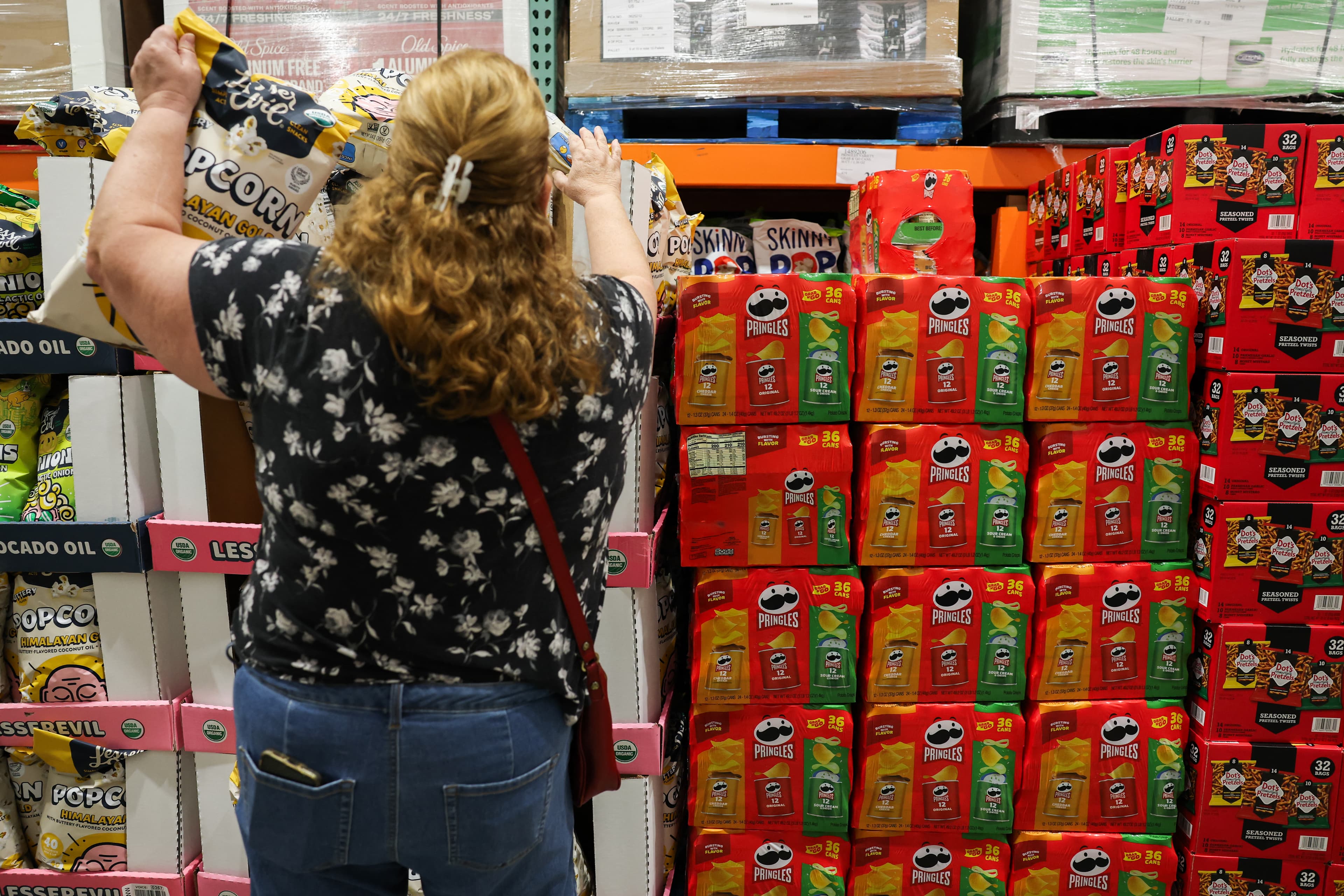
As efforts to limit ultraprocessed foods gather momentum around the world, a critical side-debate is creeping into the spotlight. The dispute centers on whether the leading standard for defining these foods is suitable for the job.
In recent journal articles, dozens of academics have criticized the methodology behind this standard, which is known as the NOVA classification system. NOVA categorizes foods on a scale of one to four: unprocessed foods like fresh fruit fall under the first category, the fourth indicates ultraprocessed foods like chicken nuggets or Doritos. Other papers have defended the benefits of foods that NOVA classifies as ultraprocessed, arguing that its standard is too broad.
Now there’s a new study in the American Journal of Public Health that has reviewed these NOVA critiques. And it’s made a notable discovery: 91% of them have at least one author with financial ties to the food industry.
“Looking at this as a trend across all of these papers is really striking,” said Erica LaFata, a research scientist at the Oregon Research Institute and the study’s lead author. “I hope that people can pay attention to where these conversations are coming from.”
The study comes as policy debates over ultraprocessed foods have reached a critical stage — and pushback against their proposed definitions has emerged as a major stumbling block.
In the United States, Health and Human Services Secretary Robert F. Kennedy Jr.’s proposals to curb consumption of ultraprocessed foods have hit a wall in the White House, the Wall Street Journal recently reported. White House officials are holding up a proposed definition of these foods, according to the WSJ, because they’re concerned that it would cover too much of the food supply and make it easier to sue the food industry for health harms.
Subscribe to our newsletter
Global health reporting, straight to your inbox
A similar debate is simmering across Latin America, Bloomberg reported in September, where the regional health authority, the Pan American Health Organization, has embraced the NOVA system while food industry groups fiercely oppose it.
An ultraprocessed-foods definition is a precondition for public health policies such as reducing their usage in school meals or requiring label warnings on them to inform consumers. “You have to know what it is that you’re intervening on,” said Lindsey Smith Taillie, a professor at the University of North Carolina and co-director of its Global Food Research Program.
Industry groups have raised numerous objections to the NOVA system. There are technical criticisms around the difficulties of categorizing foods like cheeses and bacon under NOVA. And then there are the more fundamental debates, including the argument that foods like flavored yogurt and whole-grain bread are beneficial even if ultraprocessed, so it doesn’t make sense to regulate foods based on processing levels.
“Any so-called definition that captures nearly 80% of the nation’s food supply while picking winners and losers is fundamentally flawed,” said Rhonda Bentz of the Consumer Brands Association, a leading U.S. food industry group.
In a recent comment to the U.S. Food and Drug Administration opposing the proposed ultraprocessed foods definition, the Consumer Brands Association cited dozens of studies to reinforce its position — including some whose authors have financial ties to the food industry.
The predominance of industry-linked authors criticizing NOVA should give people pause, said Taillie, who supports efforts to regulate ultraprocessed foods.
“Industry funding influences outcomes,” she said. “The fact that most of these critiques are coming from authors with industry ties means that we should downgrade our evaluation of their criticisms.”
Criticisms that are similar to the food industry’s talking points were common in academic papers attacking NOVA. But more than two-thirds of the time, LaFata found, authors with food industry ties failed to disclose these relationships.
LaFata and her co-authors identified these connections by reviewing LinkedIn profiles, online biographies and other public information about study authors. But this doesn’t necessarily mean that study authors violated journals’ disclosure policies, LaFata said. Journals often allow contributors to decide for themselves whether past industry affiliations could present a conflict of interest.
“It does raise the question of whether the existing policies are sufficient for transparency,” LaFata said.
These anti-NOVA studies have emerged as a growing body of independent research has found that ultraprocessed foods are linked to heart disease, diabetes, obesity and other health problems. The evidence of these harms is “strong enough to act” with policies to curb ultraprocessed food consumption, nutrition researcher Neha Khandpur told The Examination earlier this year.
Some criticisms of NOVA’s methodology are valid and the system is likely to evolve, said Taillie, who has evaluated ultraprocessed food policies across the Americas. But there is a practical path to regulating these items based on NOVA, she said, using the ingredients found on food labels to assess their processing levels.
Taillie said LaFata’s study showed widespread “industry distortion of the scientific narrative” about the NOVA system. She compared it to Big Tobacco’s long-ago efforts to thwart regulation of cigarettes by casting doubt on the underlying science.
“This comes directly from the tobacco playbook,” she said.
What is NOVA
The NOVA classification system is a framework for categorizing foods based on how much processing they have undergone. It was proposed by Brazilian epidemiologist Carlos Monteiro in 2009 and has emerged as the leading standard for measuring processing levels in foods. When health authorities develop regulations of ultraprocessed foods, they often use NOVA and its framework as a guide.
NOVA groups food products into the following four categories:
Unprocessed and minimally processed foods
Examples: Raw meat, fresh fruit, vegetables canned in water
Processed ingredients
Examples: Oils and fats, sugar and salt
Processed foods
Examples: Vegetables canned in syrup or brine, salted or cured meats
Ultraprocessed foods
Examples: Canned soda, margarine, “instant” noodles