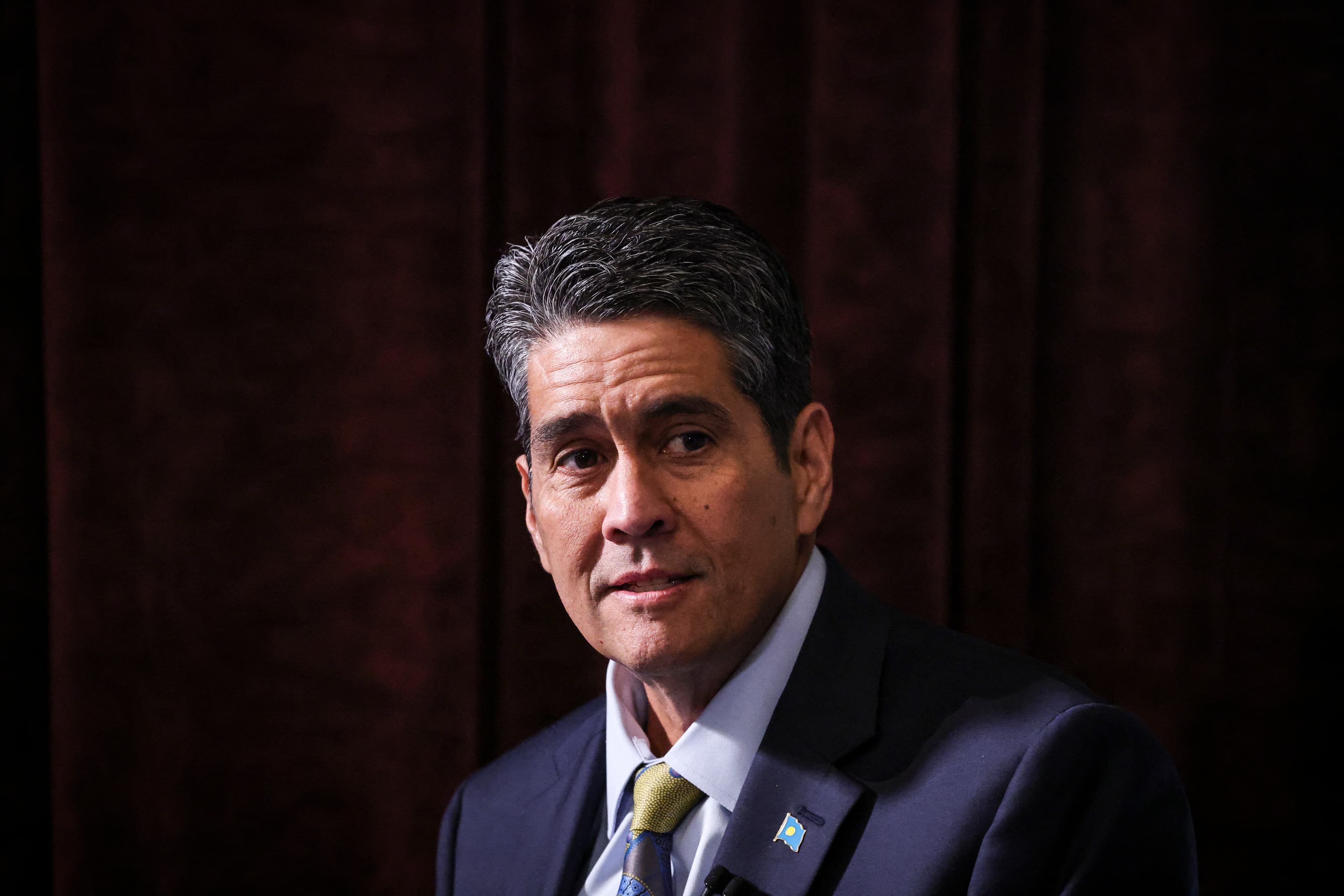
Palau, a small archipelago in the Pacific Ocean, has asked the United Nations to include nicotine among the drugs covered by a 1971 treaty that governs how countries treat psychotropic drugs such as LSD, psychedelic mushrooms and other controlled substances.
The request triggers a review of nicotine by a World Health Organization scientific committee, the first for the drug since the 1990s. But even if the committee recommends classifying nicotine as a controlled substance, it must go before a UN commission, which is unlikely to take action, people who are in drug control, said.
Banning nicotine, which has more than a billion addicted users worldwide, would “create an opportunity for an illegal supply along with all of the crime, violence and corruption that goes with illegal markets,” said Jonathan Caulkins, a Carnegie Mellon University professor focused on drug policy.
However, the move does represent a new front in the global battle to limit the availability of tobacco and nicotine as the industry shifts to e-cigarettes and nicotine pouches that deliver a buzz without the harm that comes from inhaling smoke.
Tobacco use by adults and adolescents has long been a problem in the Pacific islands, including Palau, a country of about 18,000 people whose government has pushed for tough tobacco control. About 21% of its adults smoked cigarettes in 2023, according to the Palau government, and 46% of Palau’s youth used electronic cigarettes in 2022, according to the latest WHO global health survey. The country banned electronic cigarettes, or vapes, in 2023.
The treaties call for UN member countries to set specific laws on the export and import of controlled substances and criminalize drug production and possession except for scientific or medical use. The first international drug treaty, signed in 1961, covered opioids, heroin and cannabis. A second treaty signed in 1971 created a new category of psychotropic drugs, including MDMA, also known as ecstasy, and LSD.
Subscribe to our newsletter
Global health reporting, straight to your inbox
Drugs are classified based on their addictiveness, potential for abuse and medical applications. LSD and MDMA, for example, are classified as having a “high risk of abuse” with “little or no therapeutic value.” Cannabis was reclassified in 2020, removing it from a list of drugs with no medical purpose such as heroin. Under the treaty, cannabis is now considered “highly addictive” with potential medical purpose.
The treaty allows any country, no matter the size, to request that a substance be included or reclassified. Palau President Surangel Whipps Jr. acknowledged as much in a news release, saying, “We may be a small nation, but the scale of a problem has never determined who acts on it.”
When the WHO’s scientific committee last reviewed nicotine in 1996, products to help people stop smoking, such as nicotine gum and patches, had recently become available without a prescription. The committee determined that therapeutic nicotine products had low doses of nicotine and did not lead to "hallucinations or disturbances in motor function or thinking or behaviour or perception or mood."
The committee said it would reevaluate if new evidence emerged. Two years later, it evaluated tobacco because it causes higher concentrations of nicotine in the blood than tobacco cessation products. The committee called tobacco “dependence-producing” with “no therapeutic use.” But it recommended no further review because the WHO was working on what would become the Framework Convention on Tobacco Control, a landmark anti-tobacco treaty agreed to in 2003.
In the years since, e-cigarettes and nicotine pouches (small packets of nicotine powder and flavorings that users tuck between the gum and lip) have come on the market. Users can absorb more nicotine and synthetic nicotine through these products, which are often flavored like fruits or desserts that appeal to youth. In 2018, when flavored e-cigarettes hit the market, the U.S. Surgeon General declared that teenage vaping was an “epidemic.”
Tobacco is the leading cause of preventable deaths globally, with more than 7 million people dying of smoking-related diseases each year, according to the WHO. Nicotine pouches and e-cigarettes are generally considered much safer than cigarettes because users do not inhale the same cancer-causing toxins. However, research is limited, and the potential, long-term health harms of these products are not fully understood. Long-term nicotine exposure has been linked to cardiovascular issues, among other health problems, and nicotine use by young people can impact brain development.
In a 55-page submission to the WHO, Palau’s experts argue, among other things, that it’s common for people to use several types of nicotine products, “sustaining dependence and increasing cumulative exposure rather than facilitating cessation.”
The WHO’s Expert Committee on Drug Dependence meets each October in Geneva to begin the review process. If the committee recommends that a substance be added or reclassified, it goes to the Commission on Narcotic Drugs. That political body includes 53 member states that serve four-year terms.
Experts said that the nicotine review is unlikely to move beyond the scientific committee largely because of countries’ commercial interests in the tobacco industry and the challenge of implementing a worldwide ban.
“If you look at the political level, there's no chance that either alcohol or nicotine make it into this club,” said Jürgen Rehm, senior scientist with the Centre for Addiction and Mental Health, Canada’s largest mental health care teaching hospital. “There are established commercial interests, and those established commercial interests determine how our governments react. So it would be vetoed.”